Júlia CSAPÓ
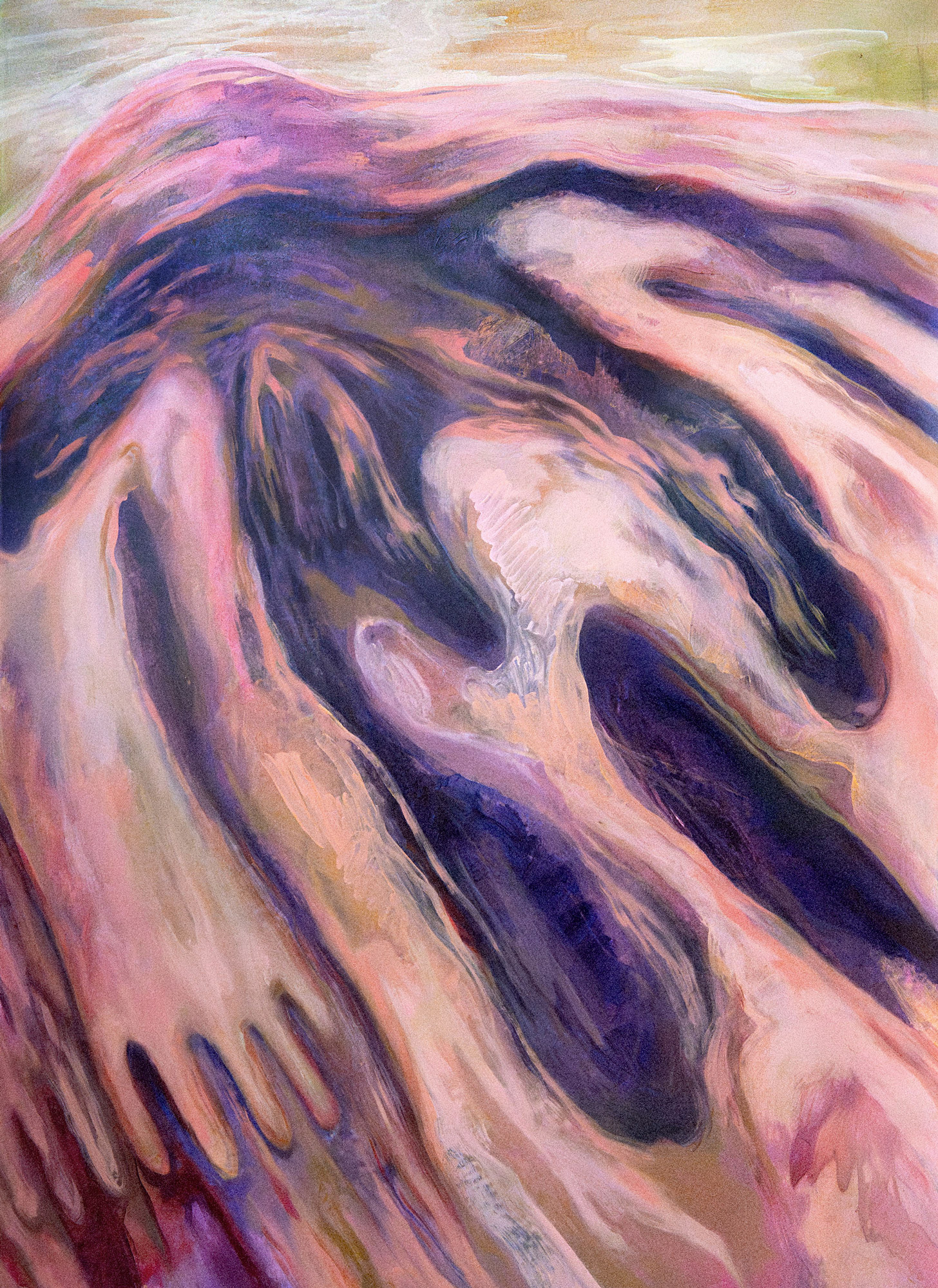
Encounter VIII., 2026
acrylic on canvas, 150×110 cm
About the artist
Júlia CSAPÓ (1999) focuses her painting practice on exploring the complex network of relationships between the human and non-human worlds. Starting from a reinterpretation of the contemporary landscape, in recent years she has become increasingly preoccupied with the possibilities and limitations of perception and cognition. In her works, she seeks to answer whether a genuine connection can be established between human and non-human beings, and if so, in what form this relationship can be experienced.
Her paintings are points of intersection between various visual and conceptual sources. Geological and biological phenomena, digital image systems, personal experiences, subjective sensations, mythical stories, and philosophical theories are layered upon one another within them. The medium of painting allows him to juxtapose different levels of abstraction, reality, and fiction to create new forms of connection, while reflecting on culturally determined patterns of world representation.
Hartmut Rosa’s theory of resonance has had a significant influence on his work; according to this theory, the ideal relationship between humans and the world is not based on domination or complete fusion, but on a relationship consisting of mutual address and response. This line of thought is evident in his paintings, appearing in the form of figures interacting with the landscape, who simultaneously immerse themselves in their surroundings while maintaining their own distinctiveness. The encounter between the human figure and various natural spaces is a recurring motif in her work: water, caves, or other natural formations appear as intermediate zones where the possibility of an encounter with the non-human may open up.
The pink, purple, or bluish-green, membrane-like bodies that frequently appear in the paintings emphasize the significance of tactile and somatic experience through the body. These forms refer to modes of perception that go beyond the need for objective knowledge of the world, bringing to the fore the experience of involvement, mutual dependence, and sensory connection. In his works, the desire for harmony and a sense of uncertainty are present simultaneously: he examines the relationship between humans and their environment through the duality of alienation and interdependence.
2018 - 2023
2021
KAIR, Košice, Slovakia
2026 Reális utópia, Karinthy Szalon, Budapest
Artworks
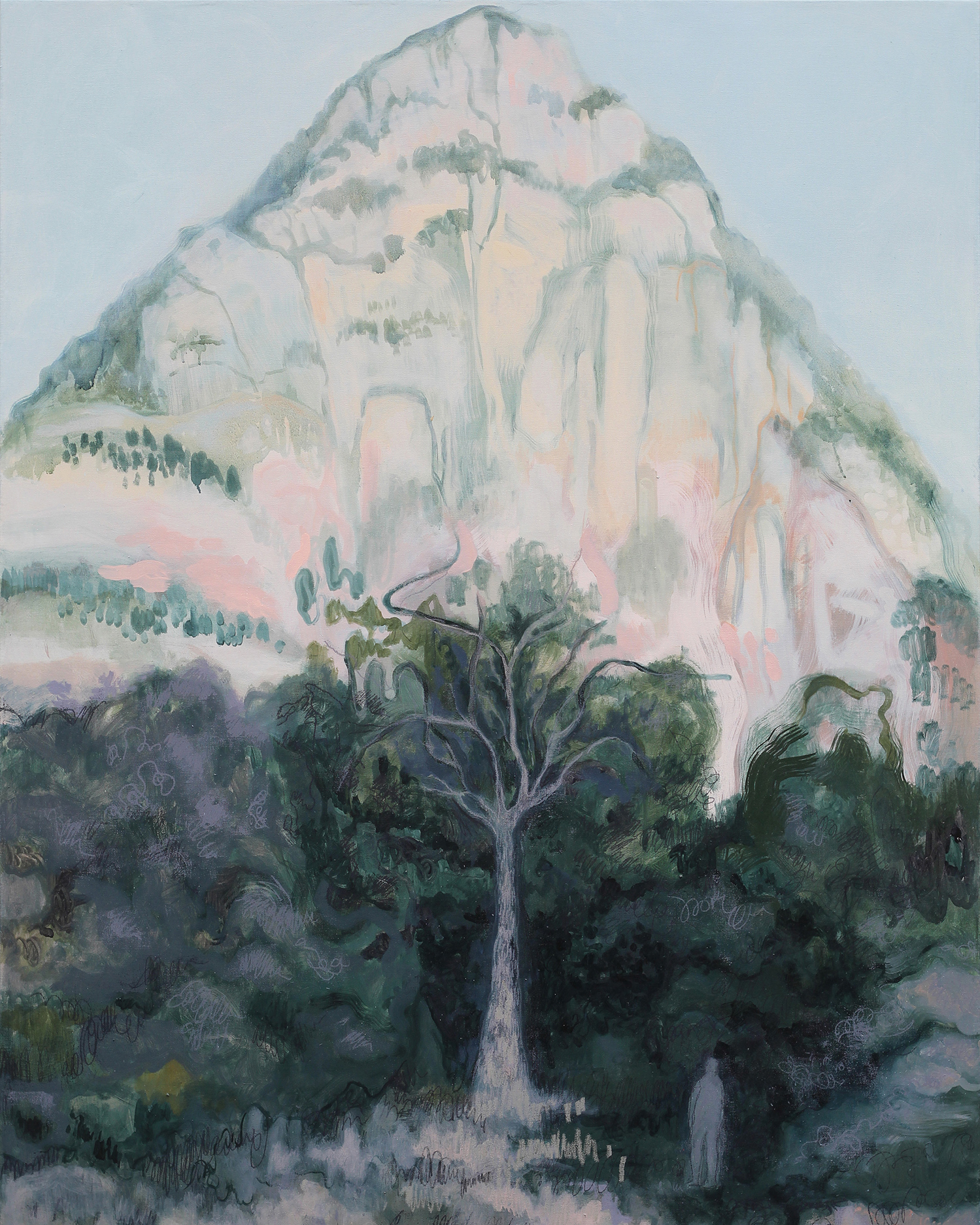
Mountain I., 2022
oil on canvas, 160×119,5 cm
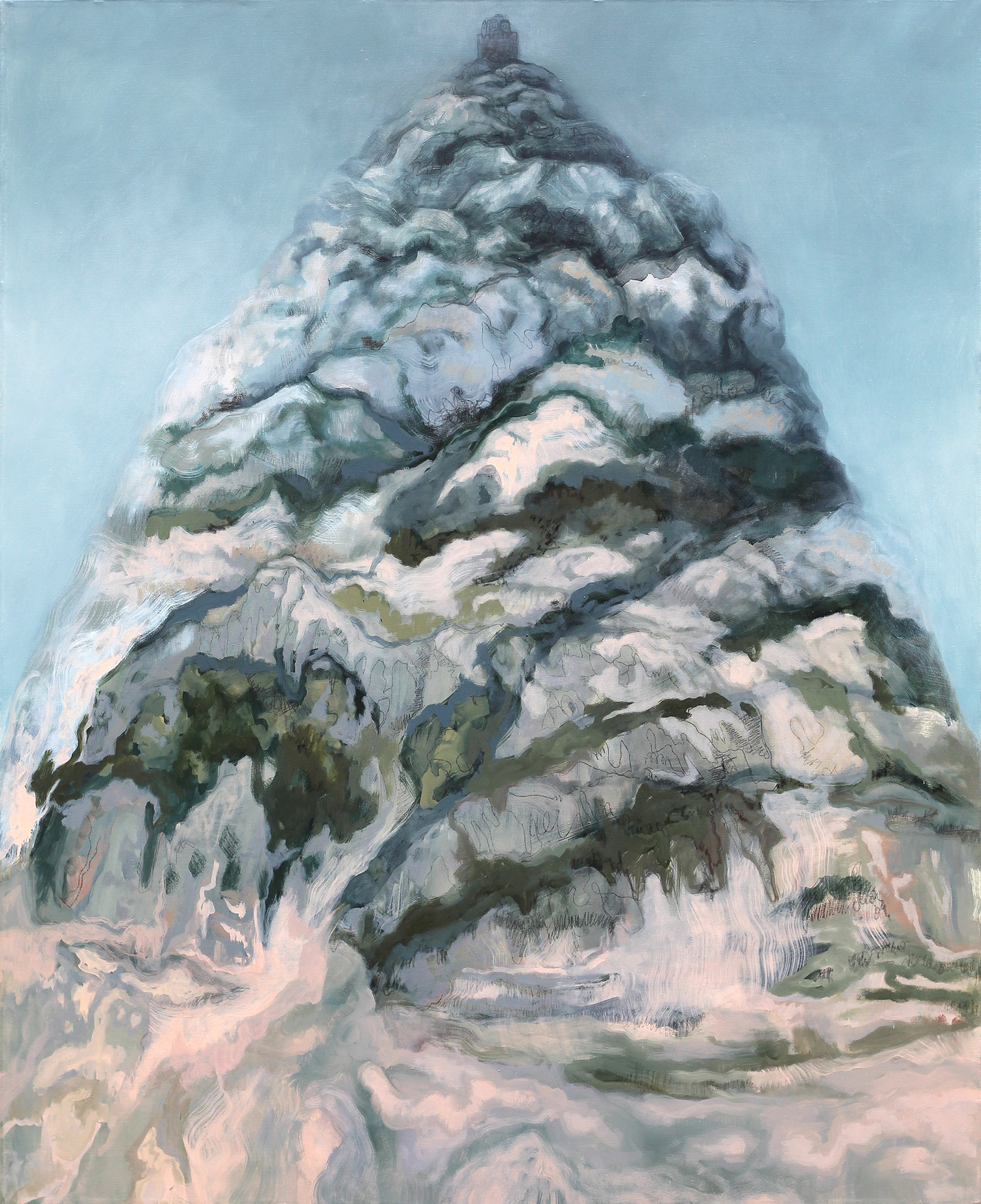
Mountain II., 2022
oil on canvas, 159×129,5 cm
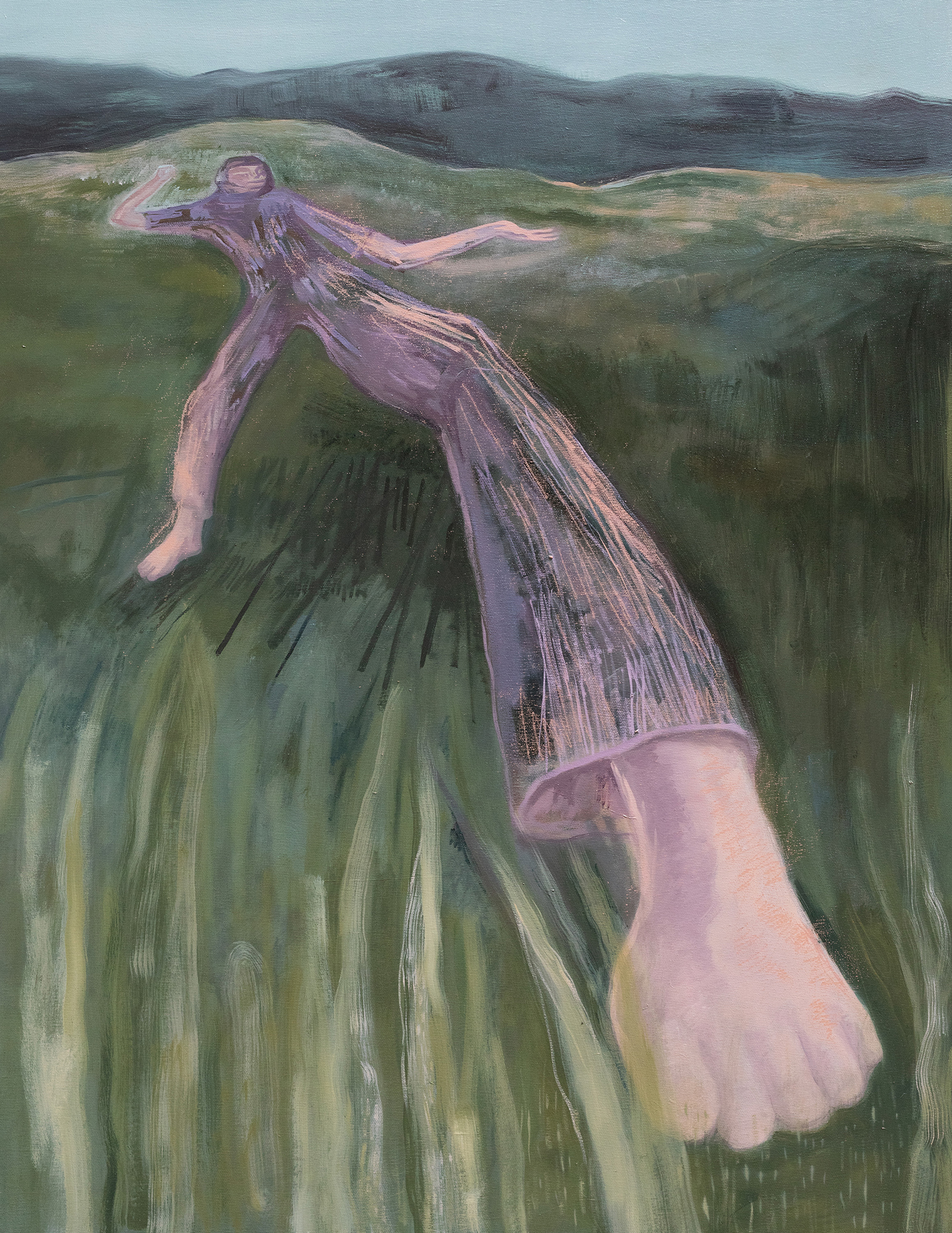
Figure in Landscape I., 2023
oil on canvas, 90×70 cm
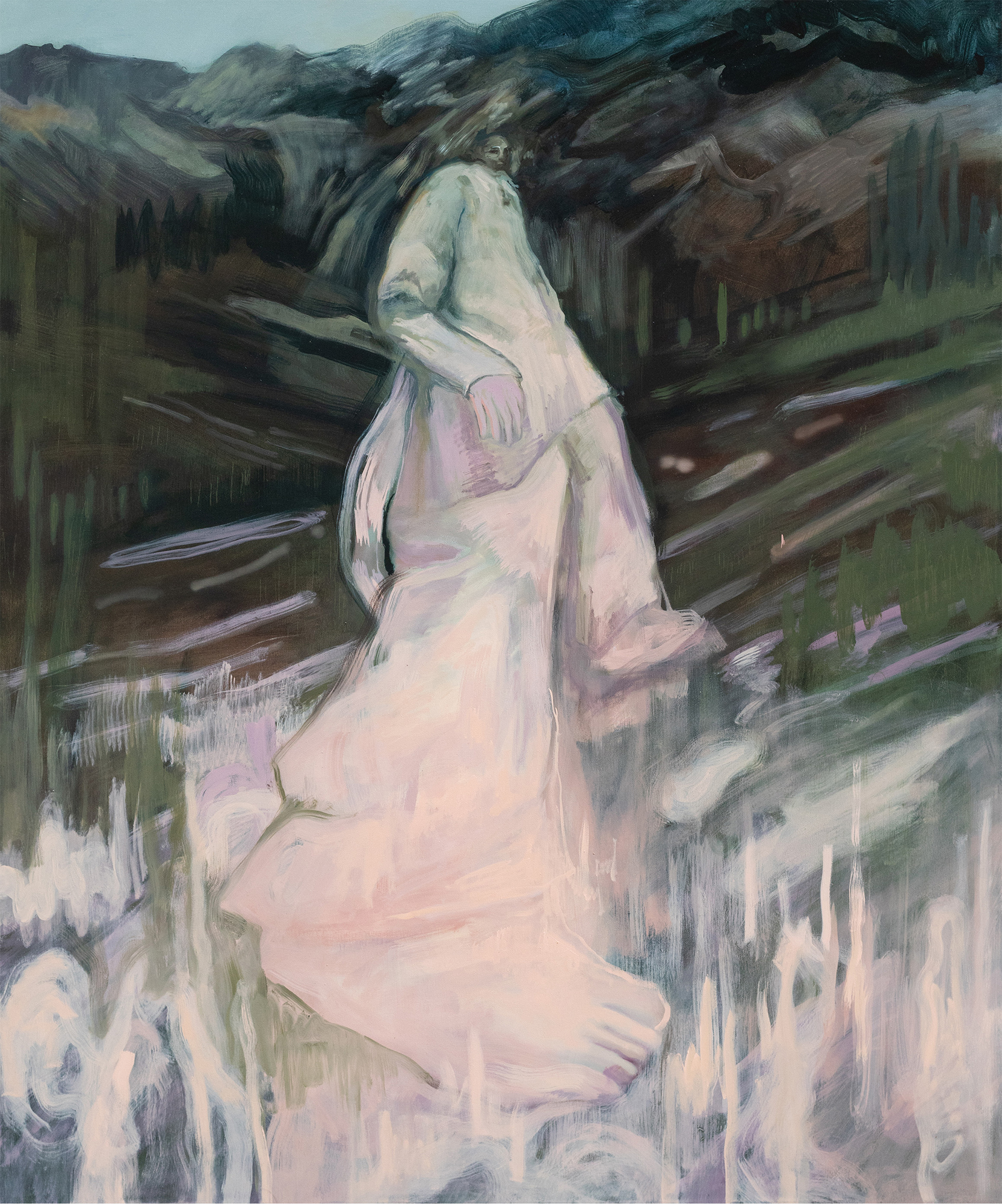
Figure in Landscape II., 2023
oil on canvas, 145×120 cm
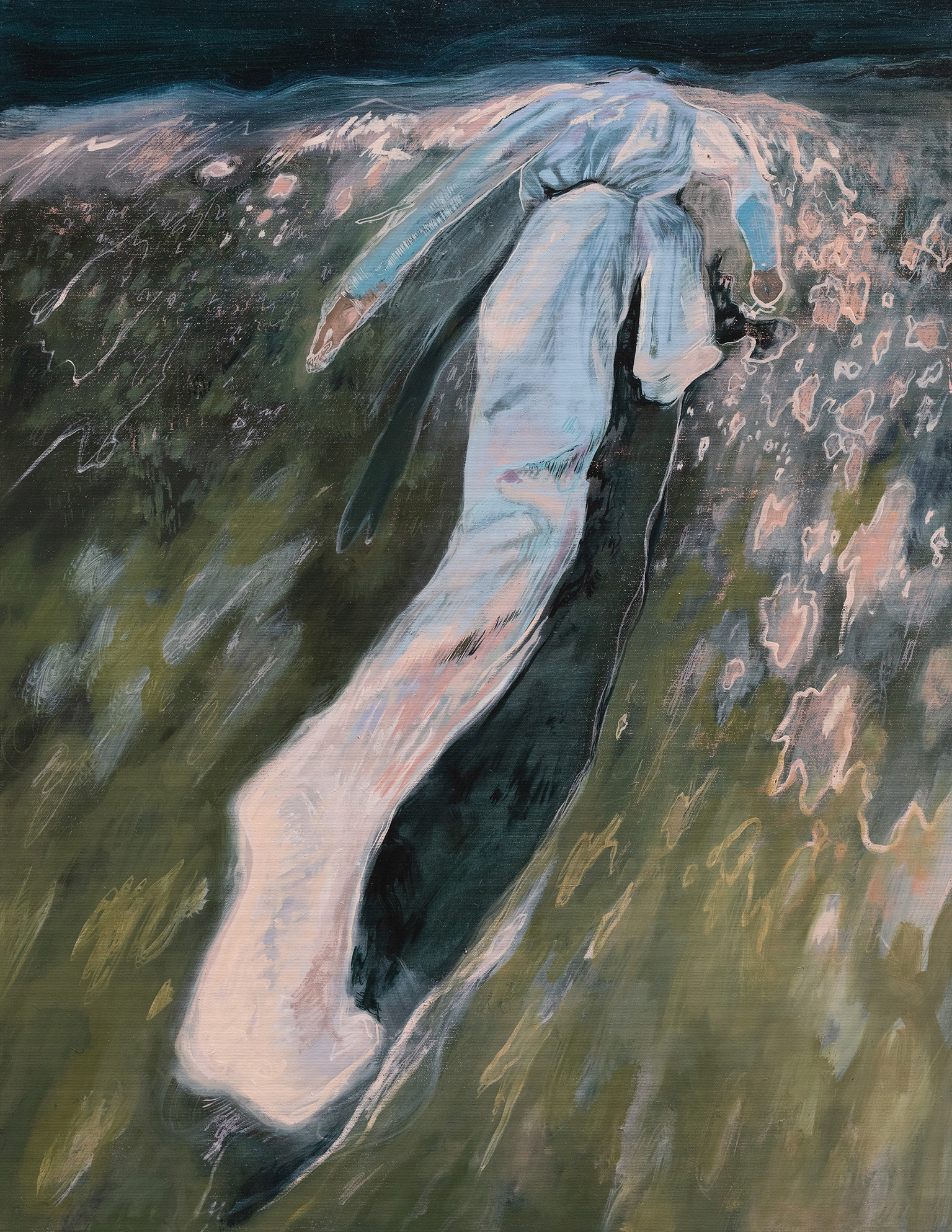
Figure in Landscape III., 2023
oil on canvas, 90×70 cm
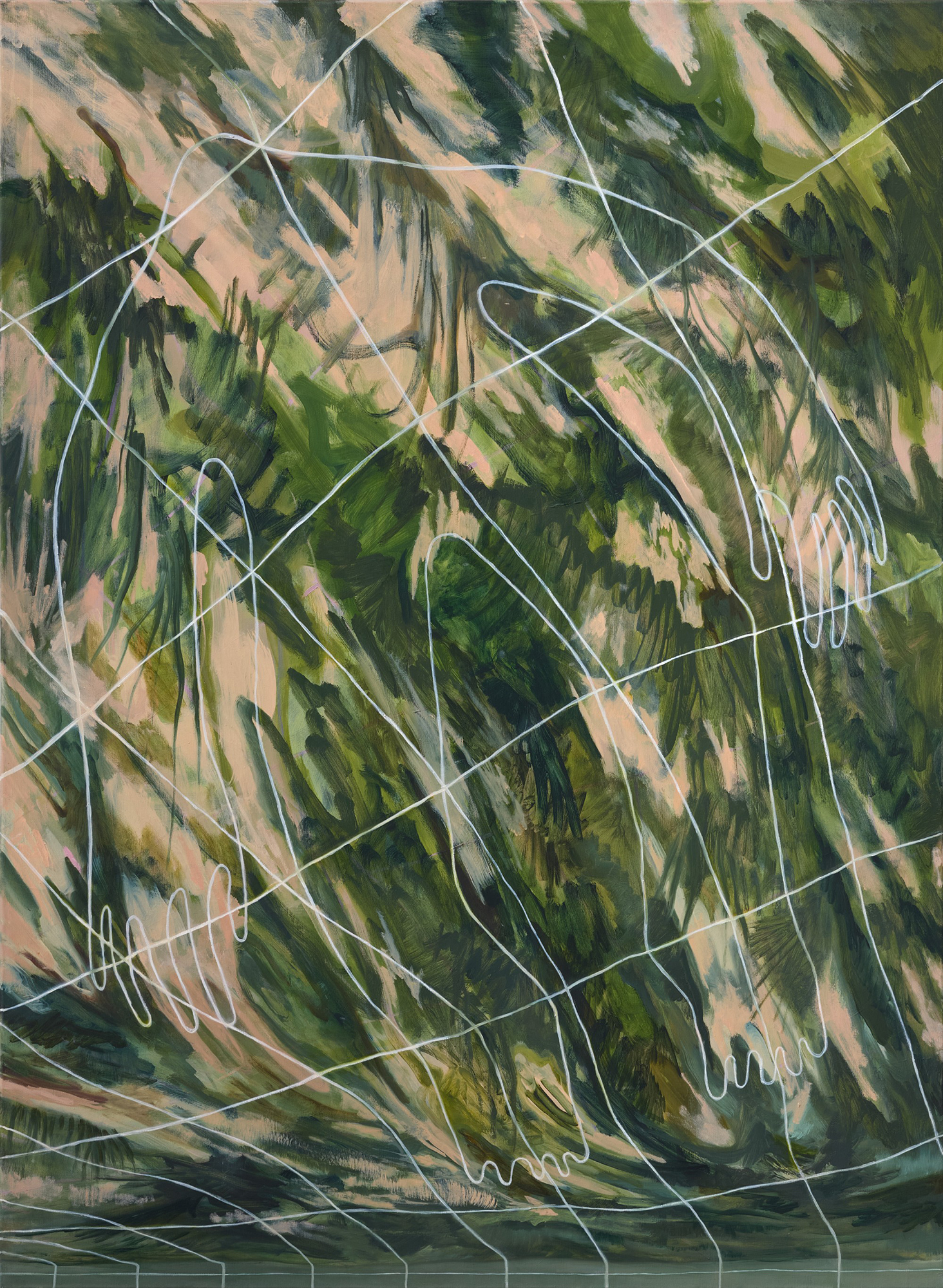
Surface-Shape-Mesh, 2024
oil on canvas, 150×110 cm
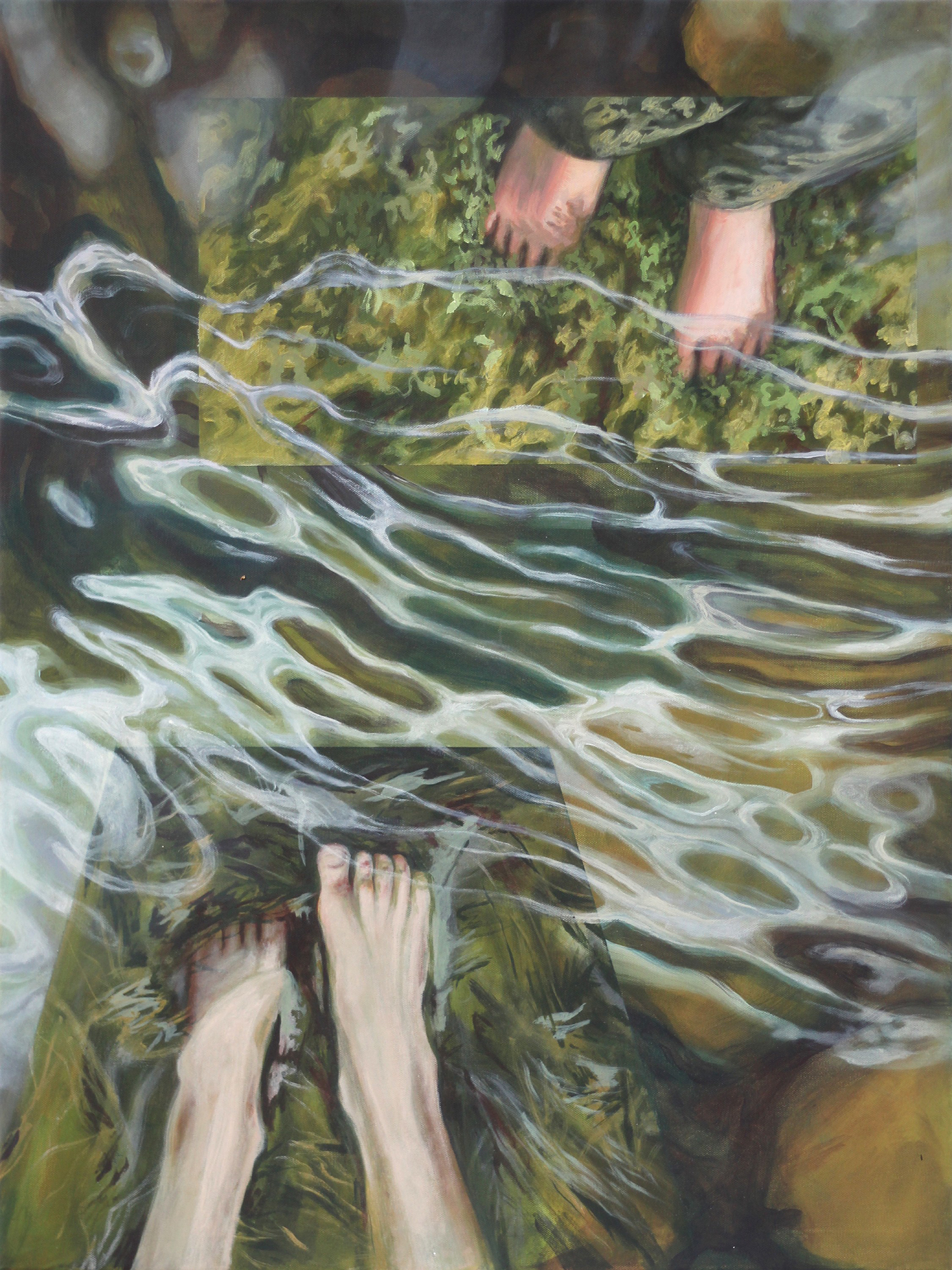
Encounter II., 2025
acrylic on canvas, 80×60 cm
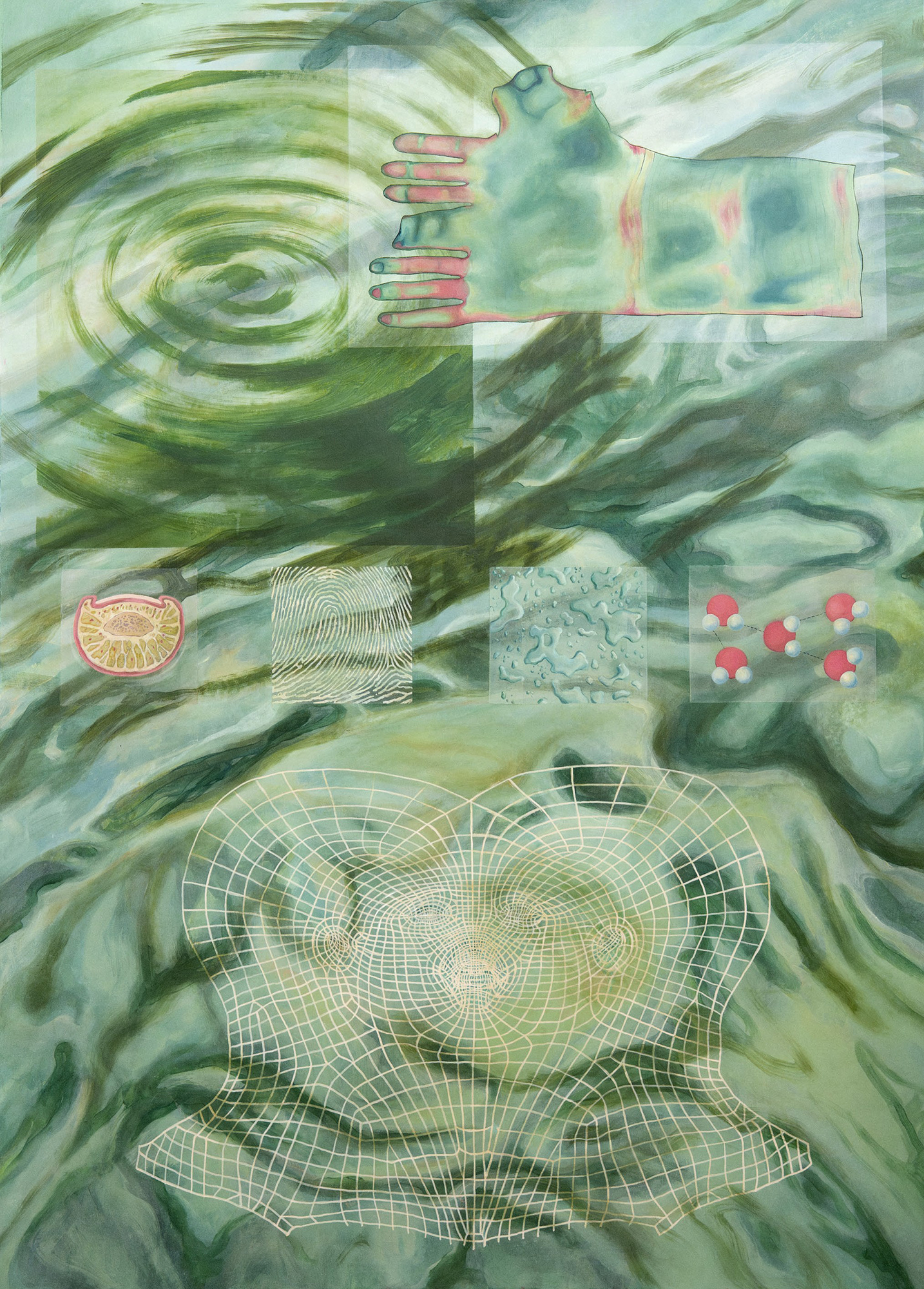
Encounter IV., 2026
acrylic, acrylic marker, canvas, 150×110 cm
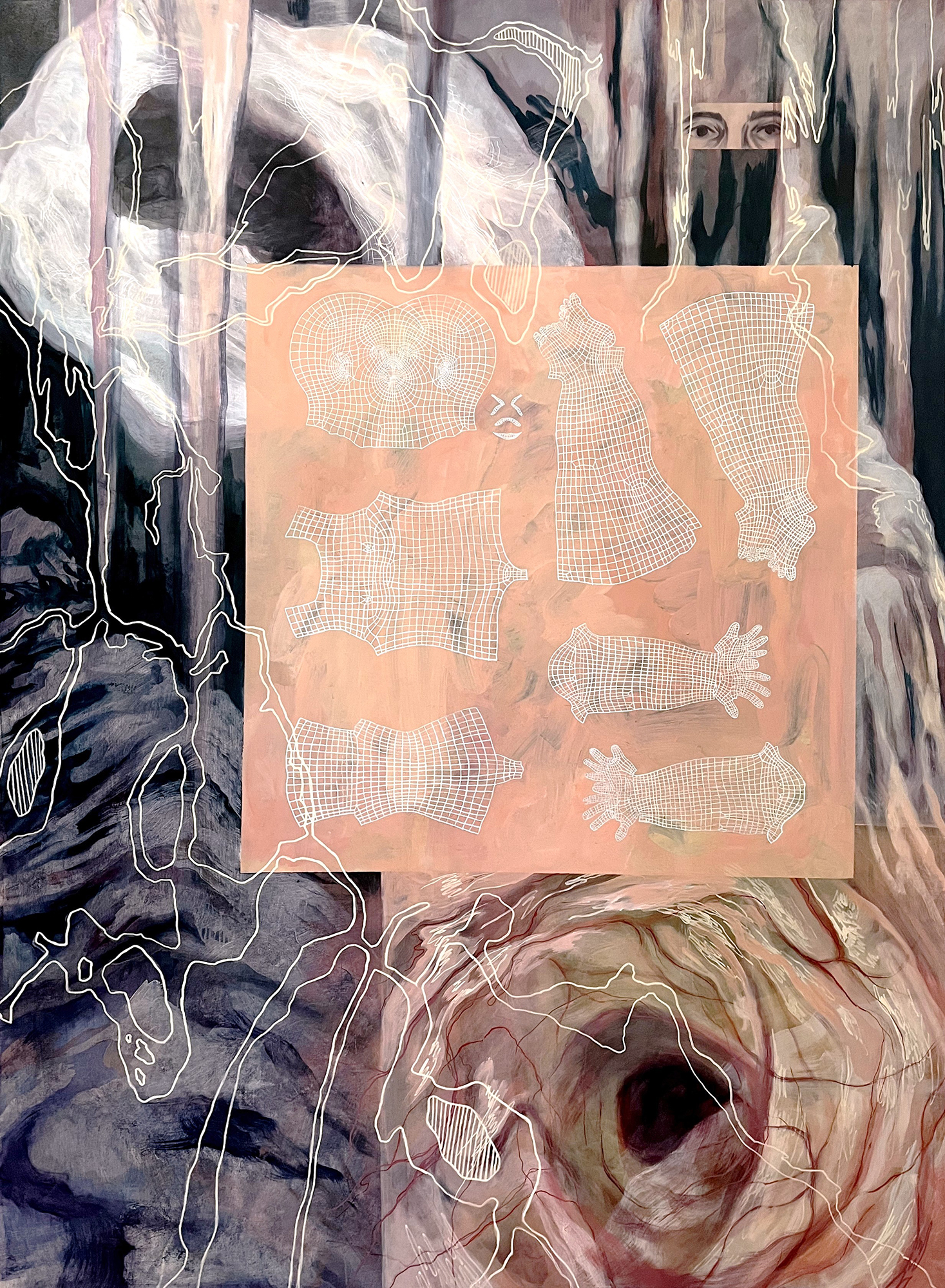
Encounter VII., 2026
acrylic, acrylic marker, canvas, 150×110 cm
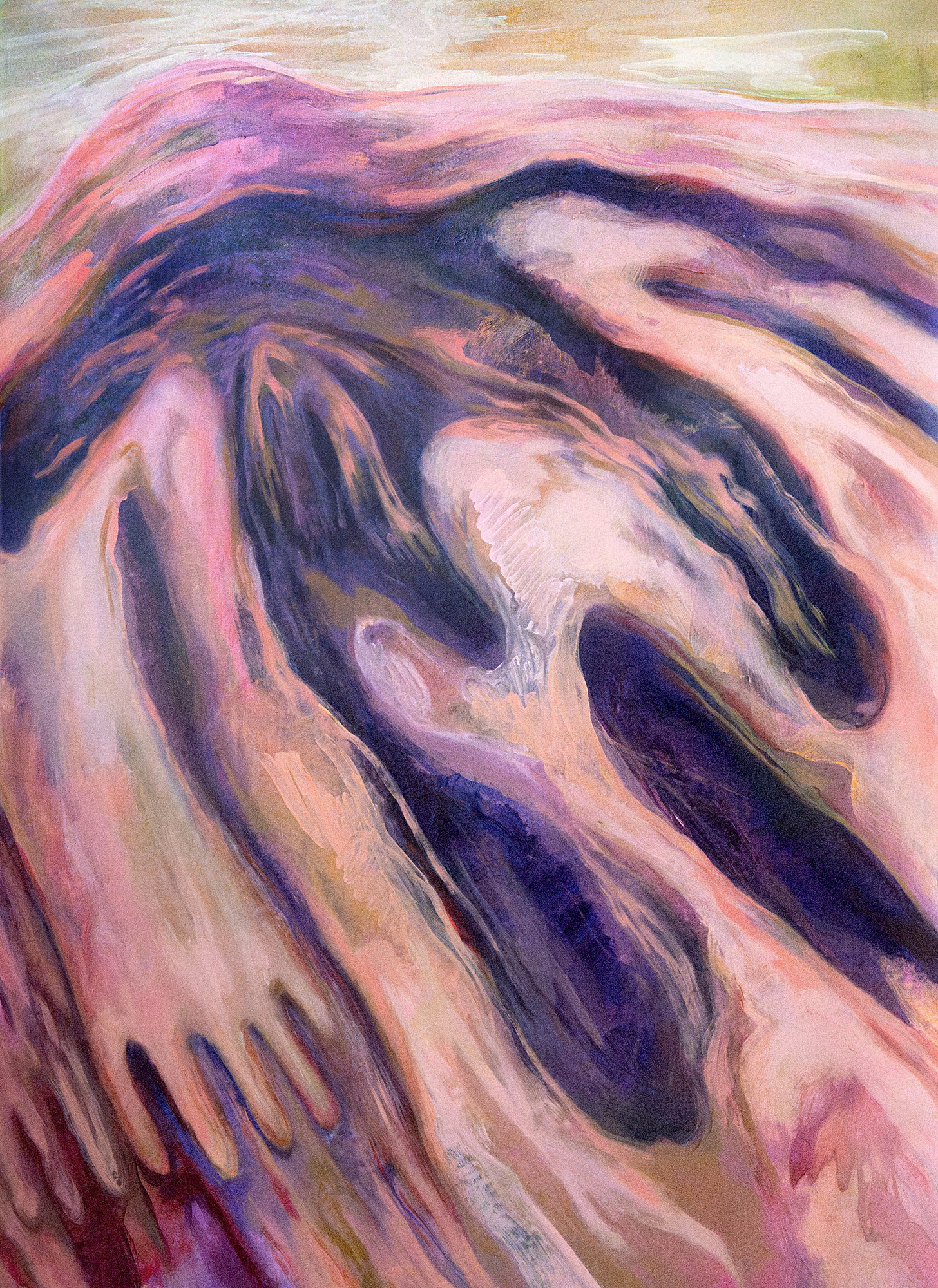
Encounter VIII., 2026
acrylic on canvas, 110×150 cm
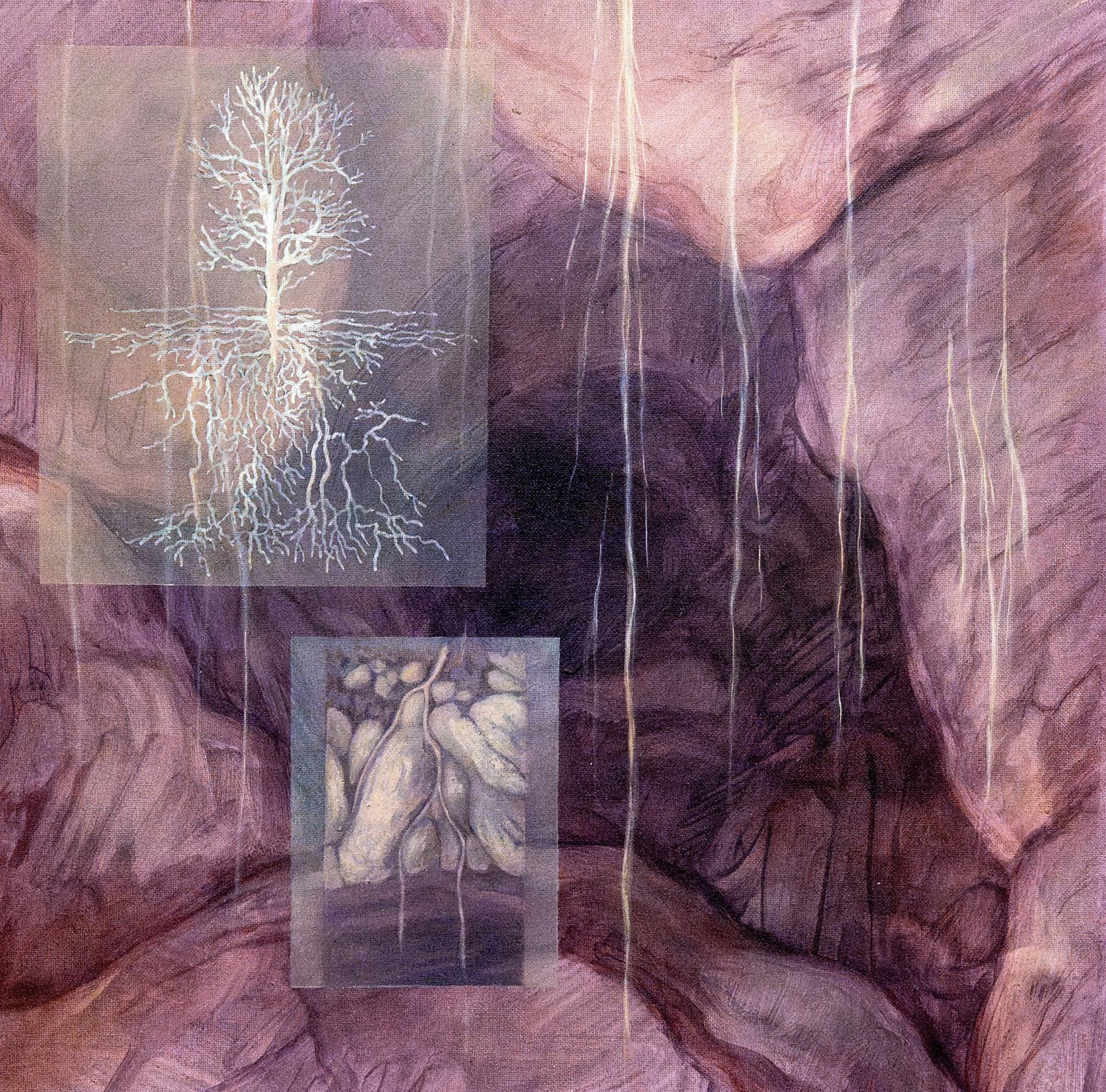
Encounter IX., 2026
acrylic, acrylic marker, canvas, 35×35 cm
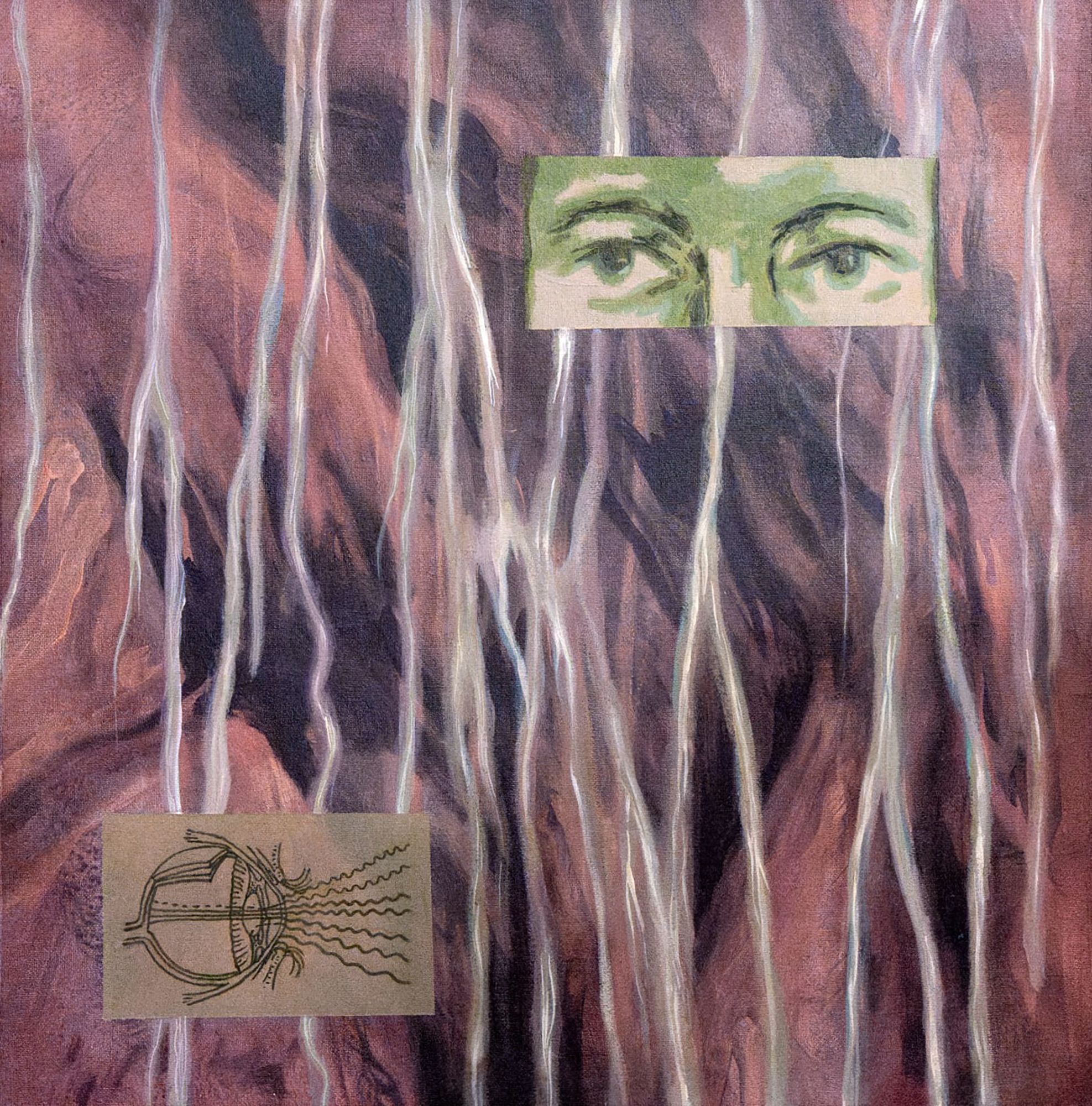
Encounter X., 2026
acrylic on canvas, 35×35 cm
Exhibitions
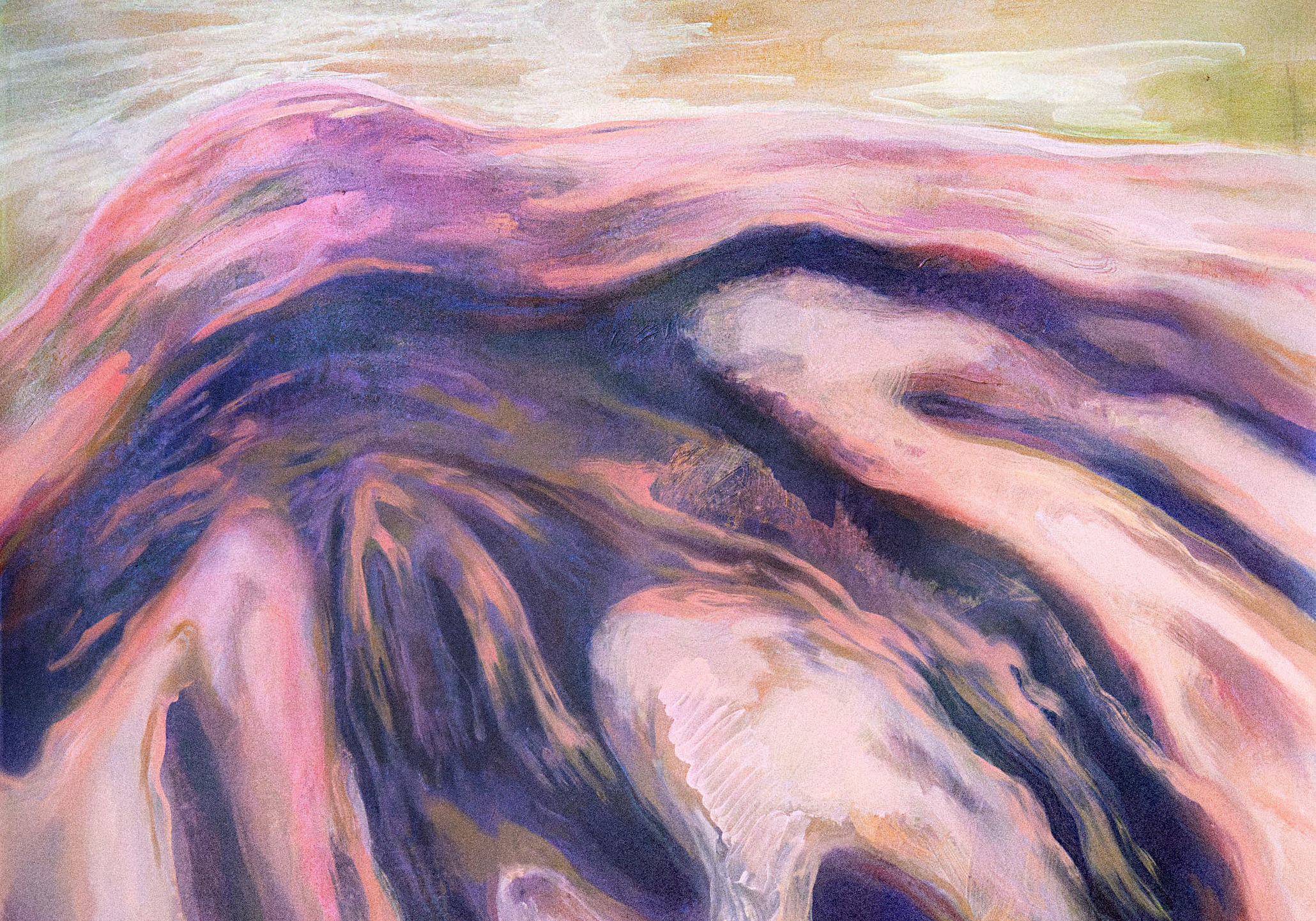
Inner Spaces
26 March – 14 May 2026
Rechnitzer Gallery's next exhibition brings together the works of three young artists in dialogue with each other – alongside Eszter KÁLÓCZY, who has already exhibited at the gallery, the works of Júlia CSAPÓ and Emma KLING will be on display for the first time. In their paintings, pictorial objects, and installations, different interpretations of outside and inside enter into dialogue: internal, subjective spaces enter into constant tension with the external environment, which can be described and understood objectively.