a
a
Ádám DALLOS, Gideon HORVÁT, Vanda HUMINILOWICZ, Zsófia JAUERNIK, Rebeka RÁCZ, Anna TÁNCOS:
Whispering Ruins
26 May - June 26 2026
The Rechnitzer Gallery’s summer exhibition focuses on works that draw heavily on the era of antiquity as a primary source of inspiration. Given that the connection to Greek and Roman antiquity has been a recurring artistic practice since the Renaissance, and considering the works of contemporary artists, one might ask in what ways this connection remains relevant or exciting today. For which themes can this return be inspiring, and which perspectives and artistic practices are worth rethinking from a contemporary viewpoint? To what extent do artists approach this period critically or rather nostalgically? How can these topos, often deeply ingrained in European culture, be reframed? The works of the group exhibition Whispering Ruins draw inspiration from ancient culture in the broadest sense: architecture, archaeology, and ruins, as well as mythology and its interpretations, become recurring themes across a variety of paintings, sculptures, and installations.
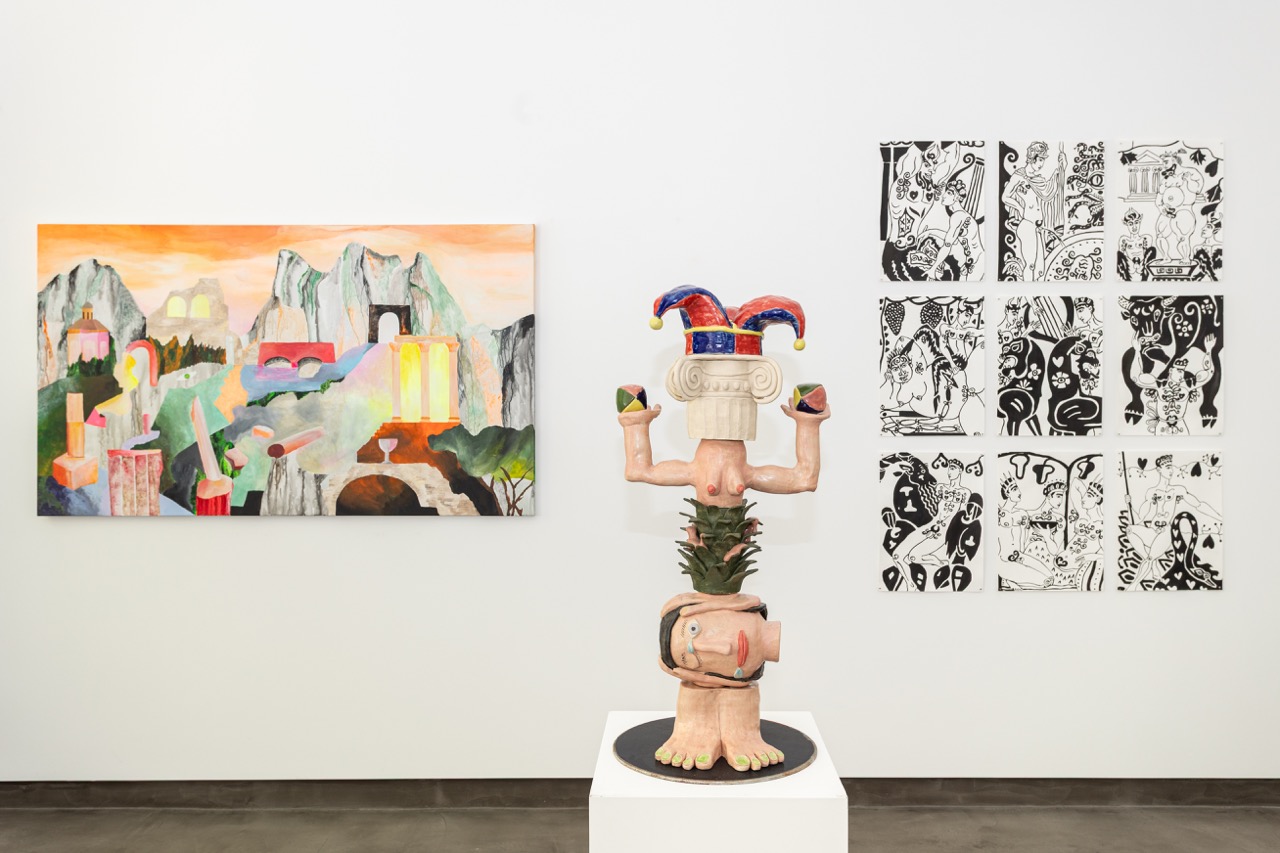
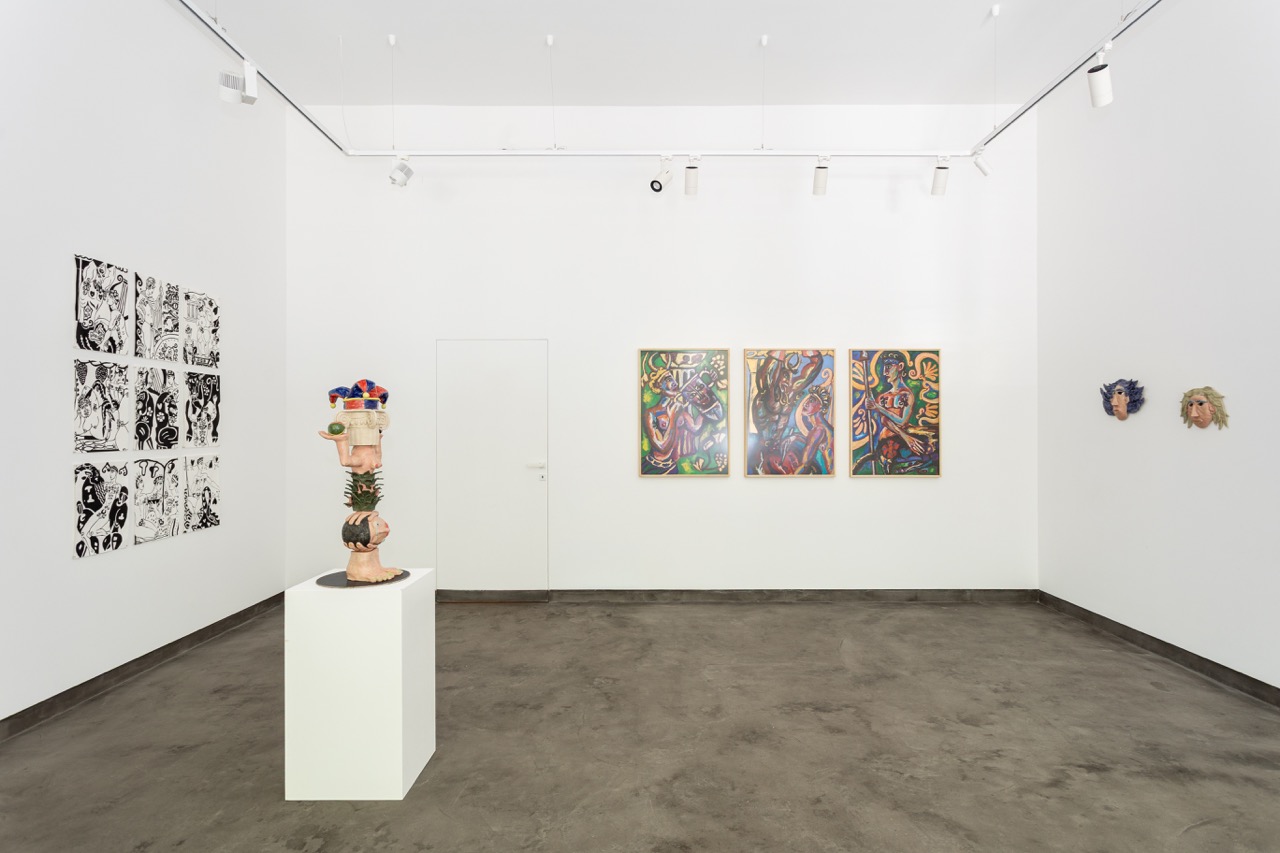
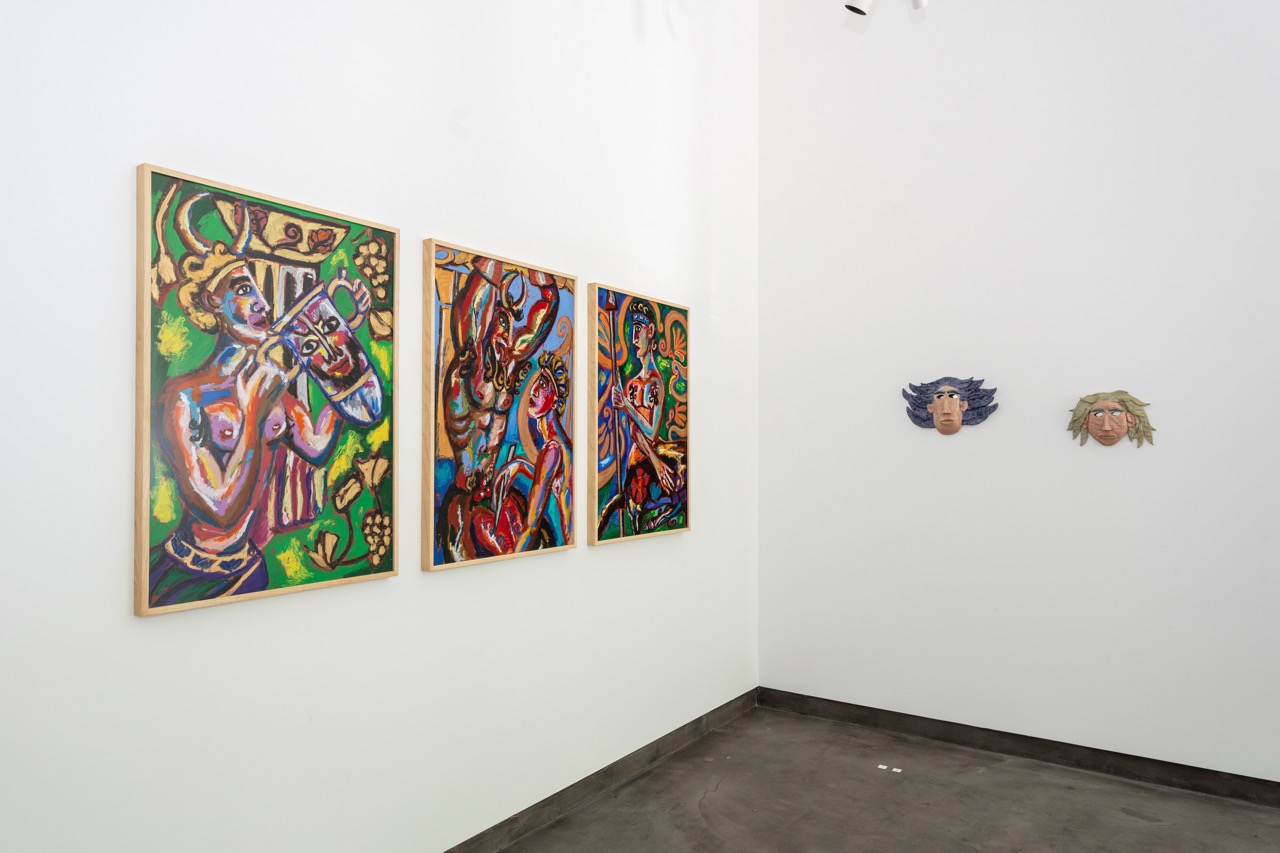
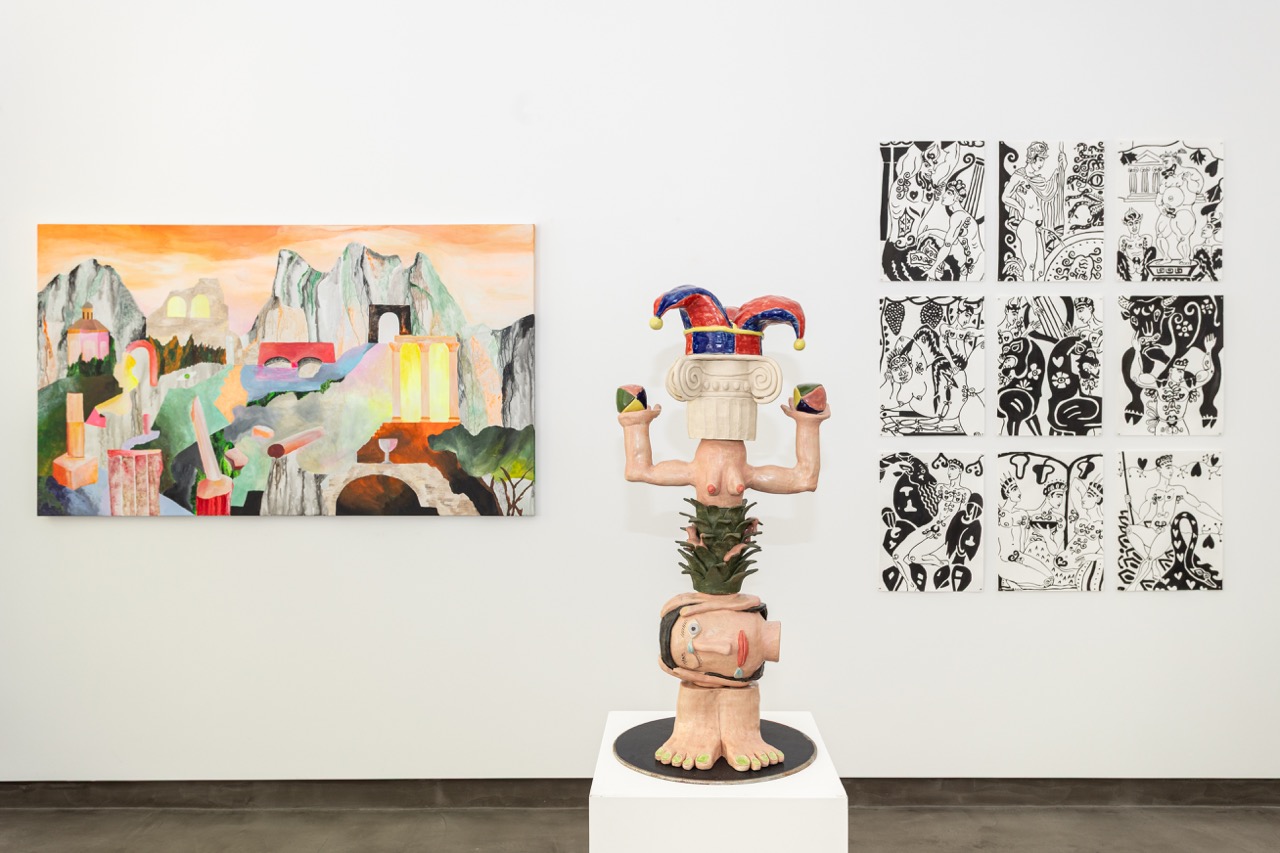
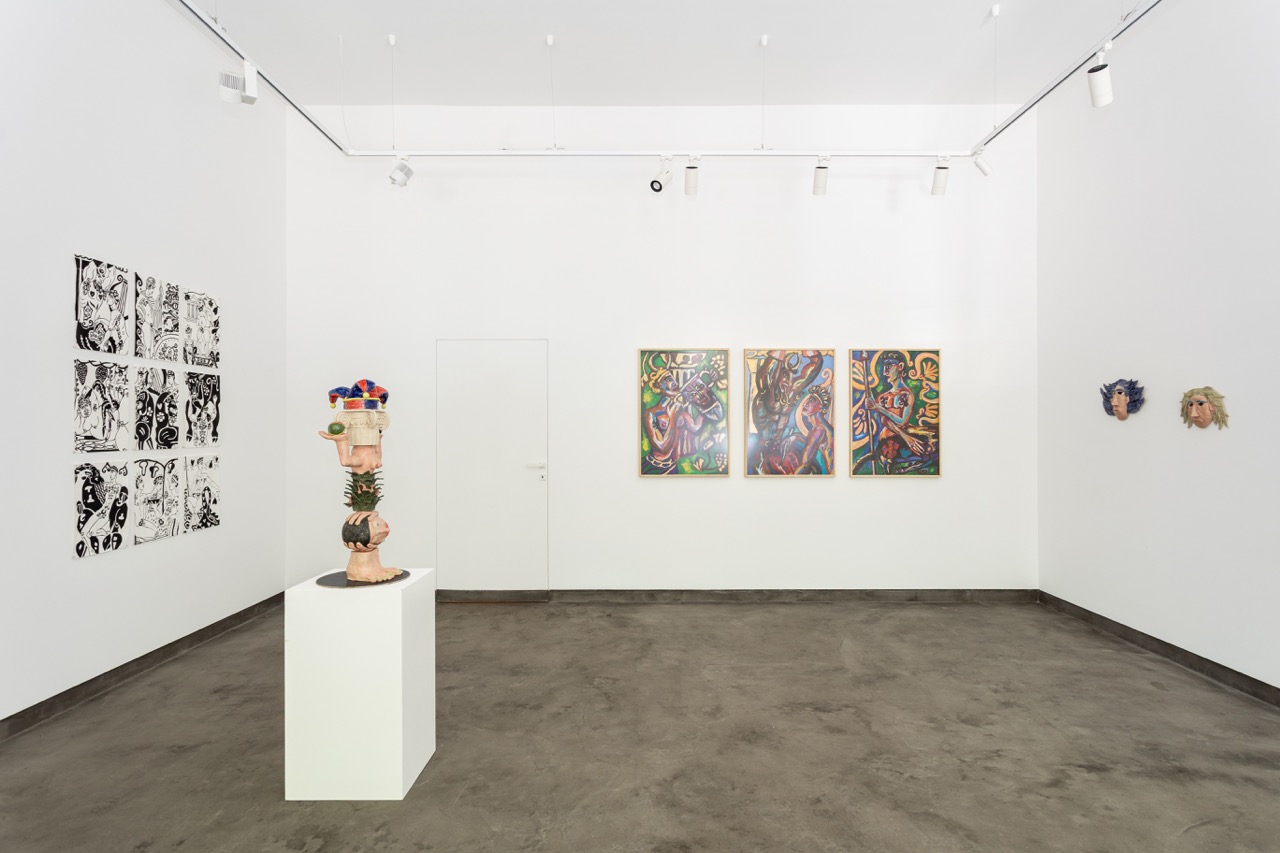
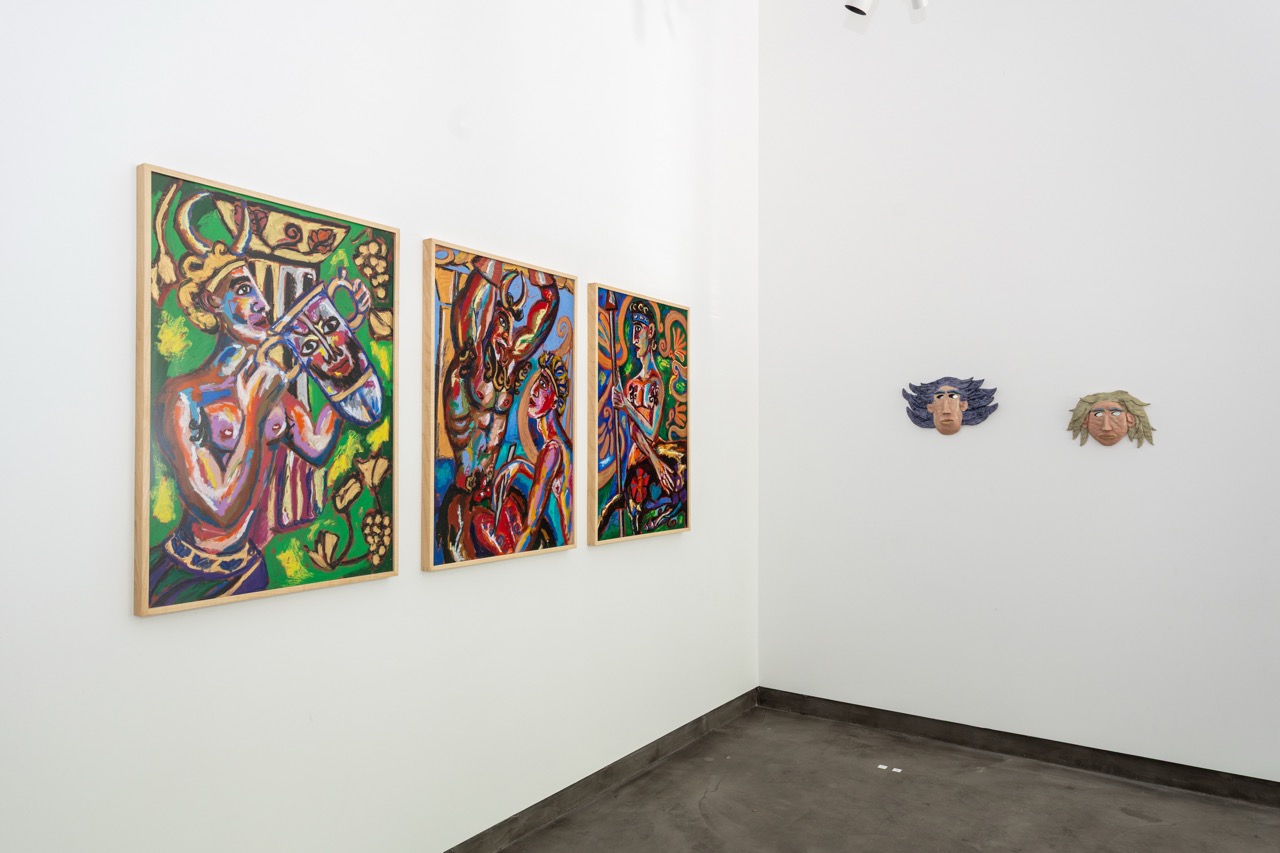
Ádám Dallos’s ink drawings were created for the new edition of Ovid’s Metamorphoses, published this year by Kalligram and translated by Zoltán Csehy – the complete series consists of approximately 100 pieces. Contemporary interpretations of mythological scenes are not foreign to the artist – he has previously explored the myth of the Minotaur and other human-animal hybrids. The selection shown here focuses on erotic encounters and interactions: humans, demigods, and gods engage in sensual and sexual relationships with centaurs, satyrs, and other half-animal, half-human creatures in these meticulously detailed works, which evoke Picasso’s classical period. As the artist puts it, “the drawings use decorative motifs from Etruscan tomb painting and Greek red- and black-figure vase painting – stylized hearts, flowers, and penises hanging like bunches of grapes – which are built on the contrast of black-and-white patches.” The oil pastel works emerged from the experiences of the Ovid graphics; the precursors to Dallos’s large-scale oil paintings also explore mythological themes, such as the story of Apollo and Marsyas.
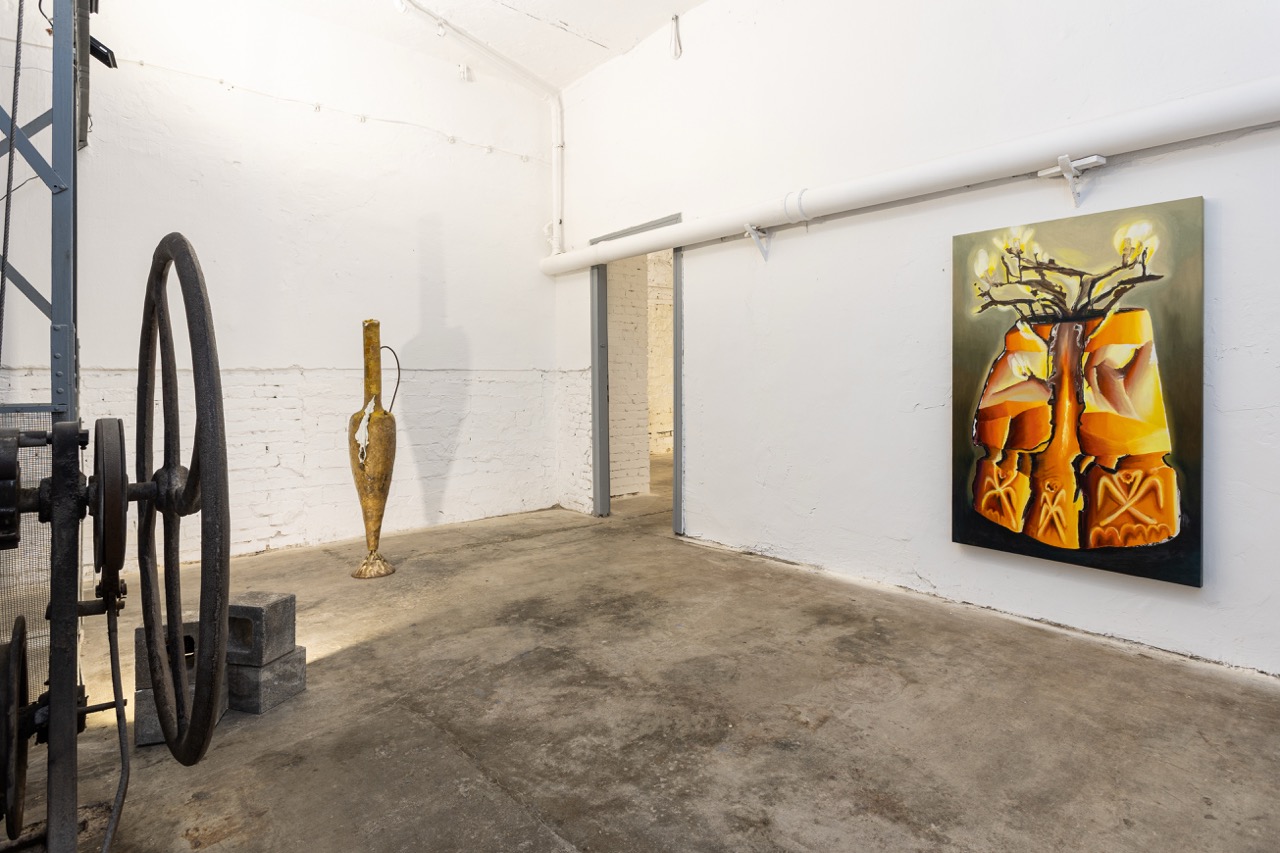
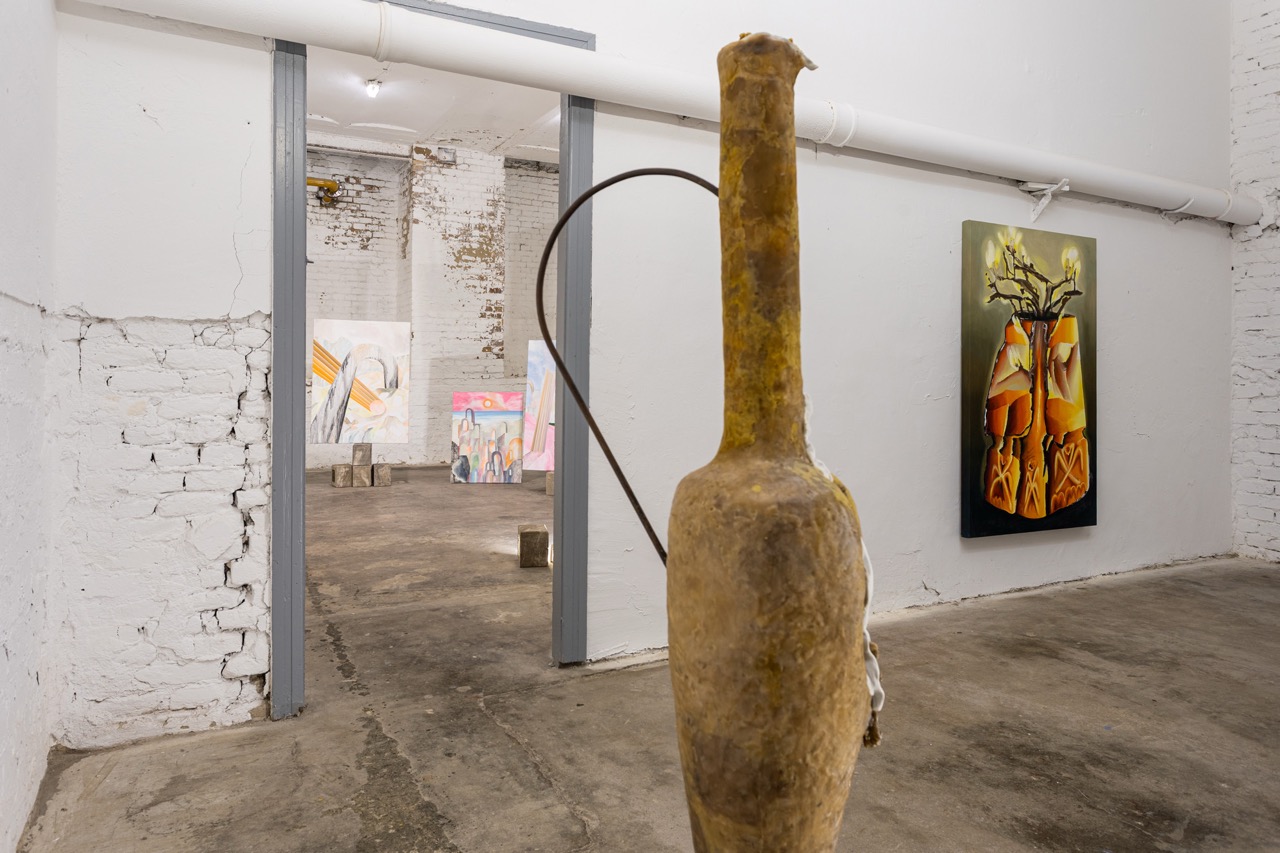
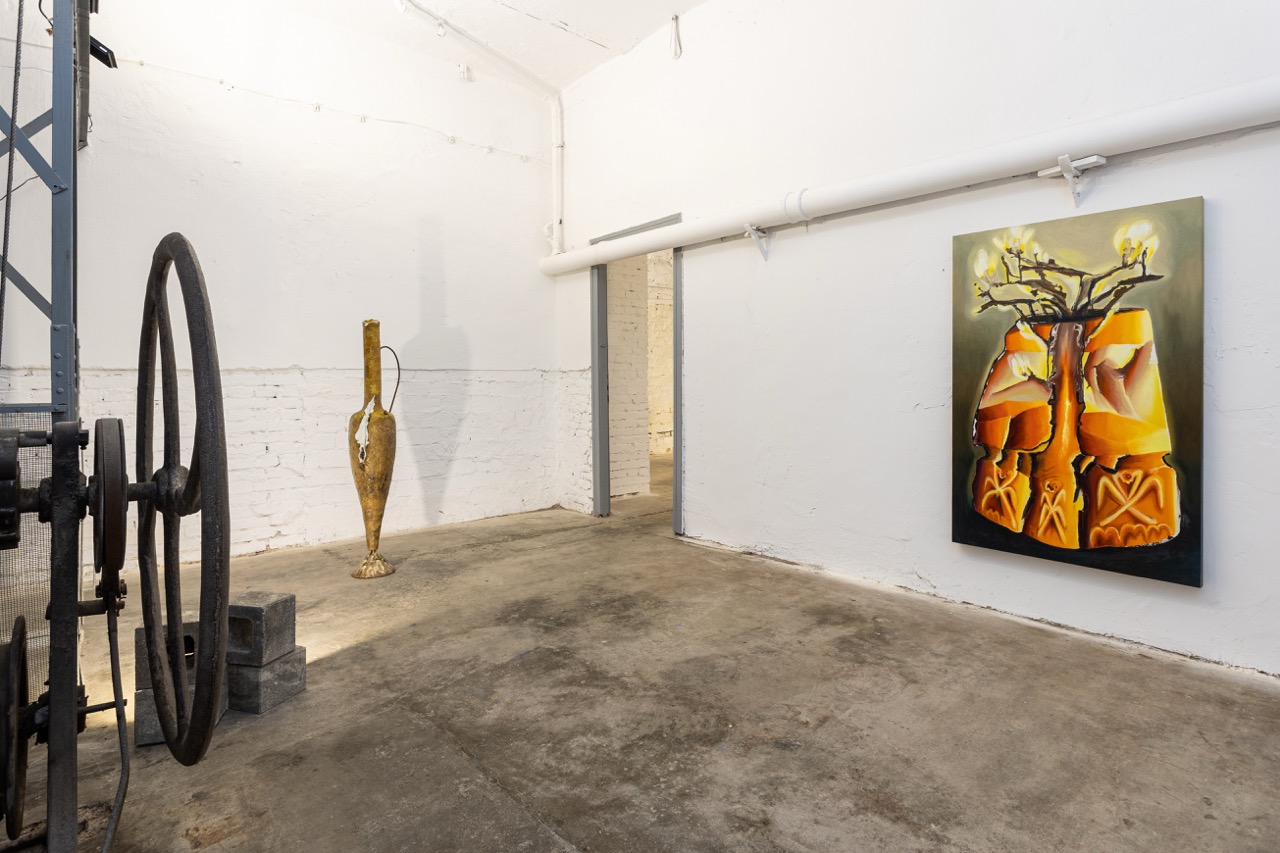
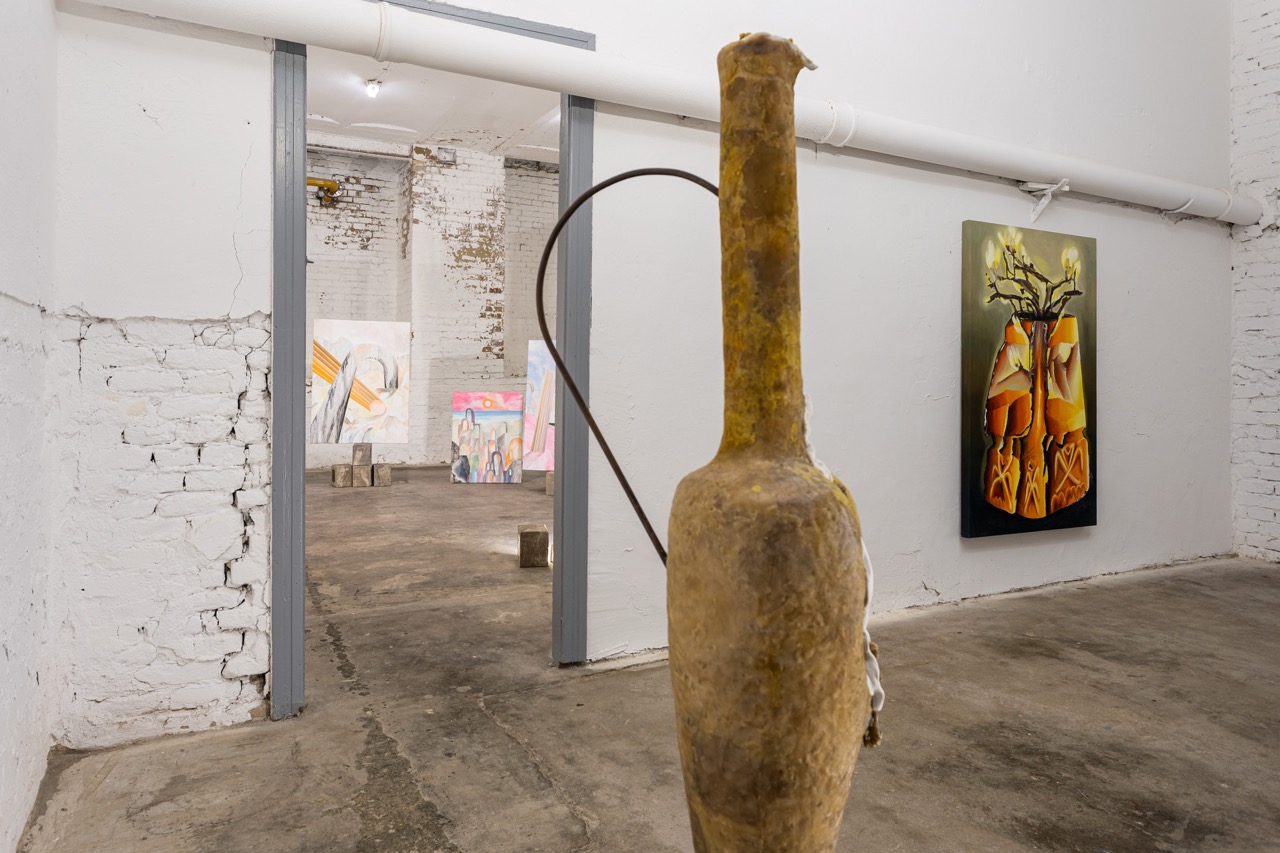
Like Ádám Dallos, Gideon Horváth also drew on ancient mythology in many of his works, though not merely from the homoerotic perspective that is deeply interwoven with Greek culture, but from a broader queer perspective. In his early beeswax works, he deconstructed the figure of the faun, explored the story of King Midas, and made objects associated with Dionysus – such as the cornucopia – into important symbols in his practice. The work shown here, created for the Kunsthalle Bratislava’s final group exhibition in 2023 before its closure, is the first in which Horváth begins to experiment with the form and motifs of the large-scale amphora. The artist treats the Greek vase as a distinct vessel from which a kind of lush, abundant, yet not necessarily “well-intentioned” substance gradually emerges. Horváth creates this material – which bursts forth from the beeswax amphora, now almost skin-colored from repeated displays – out of porcelain, a technique he employed for the first time in this installation.
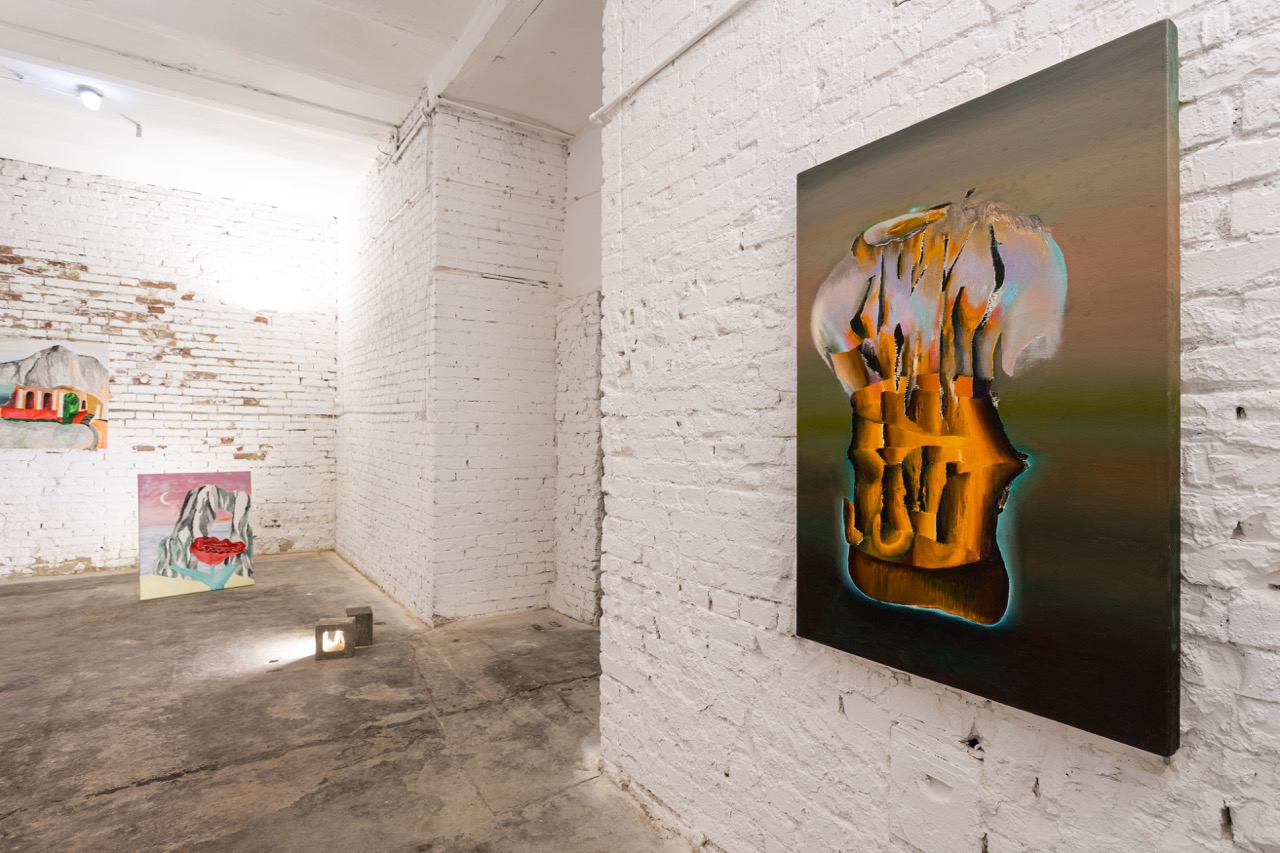
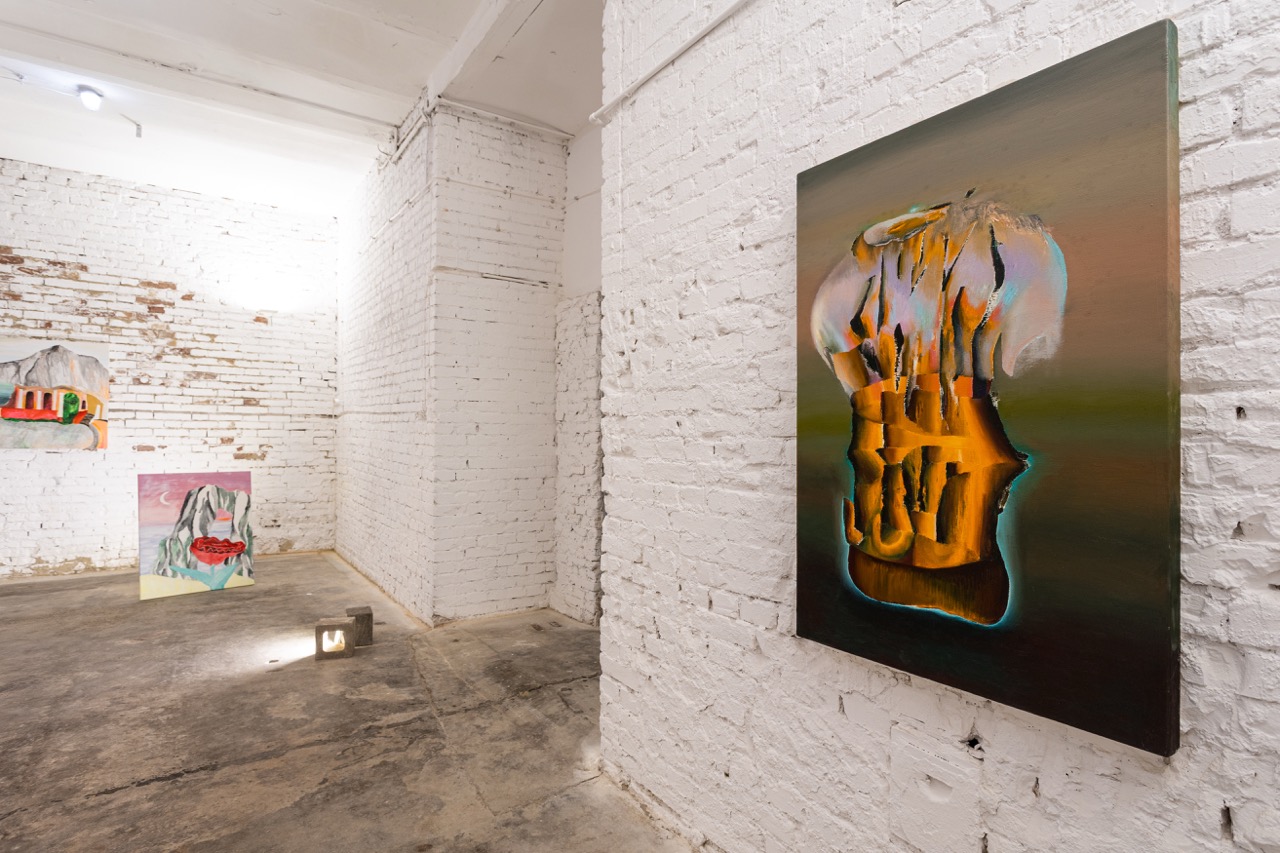
The amphora is also a recurring motif in Vanda Huminilowicz’s works. Like Horváth, the artist views the vase as a unique vessel that symbolizes and contains the body; for this very reason, given its shape and function, it can evoke the female cycle and fertility. In the paintings, Huminilowicz’s amphoras become life-sized objects, monumental floral still lifes, which on the one hand may contain everyday items, such as wine or oil, which the ancient Greeks also stored in them, but on the other hand may also conceal a healing elixir or a deadly poison. As Vanda Huminilowicz summarized, for her, the amphorae are unique “internal landscapes” that build upon the storytelling tradition of Greek vases, yet present personal events and internal processes in an abstract, expressive manner.
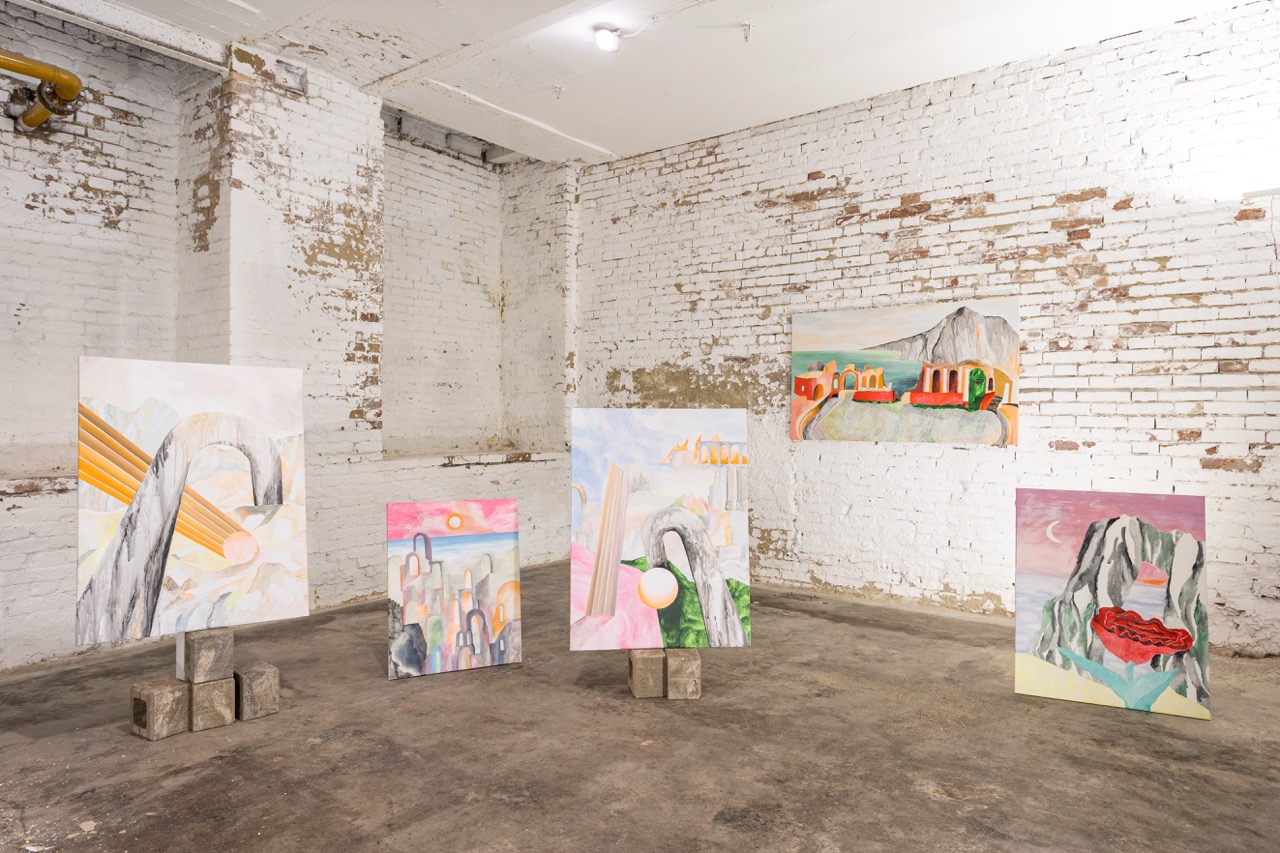
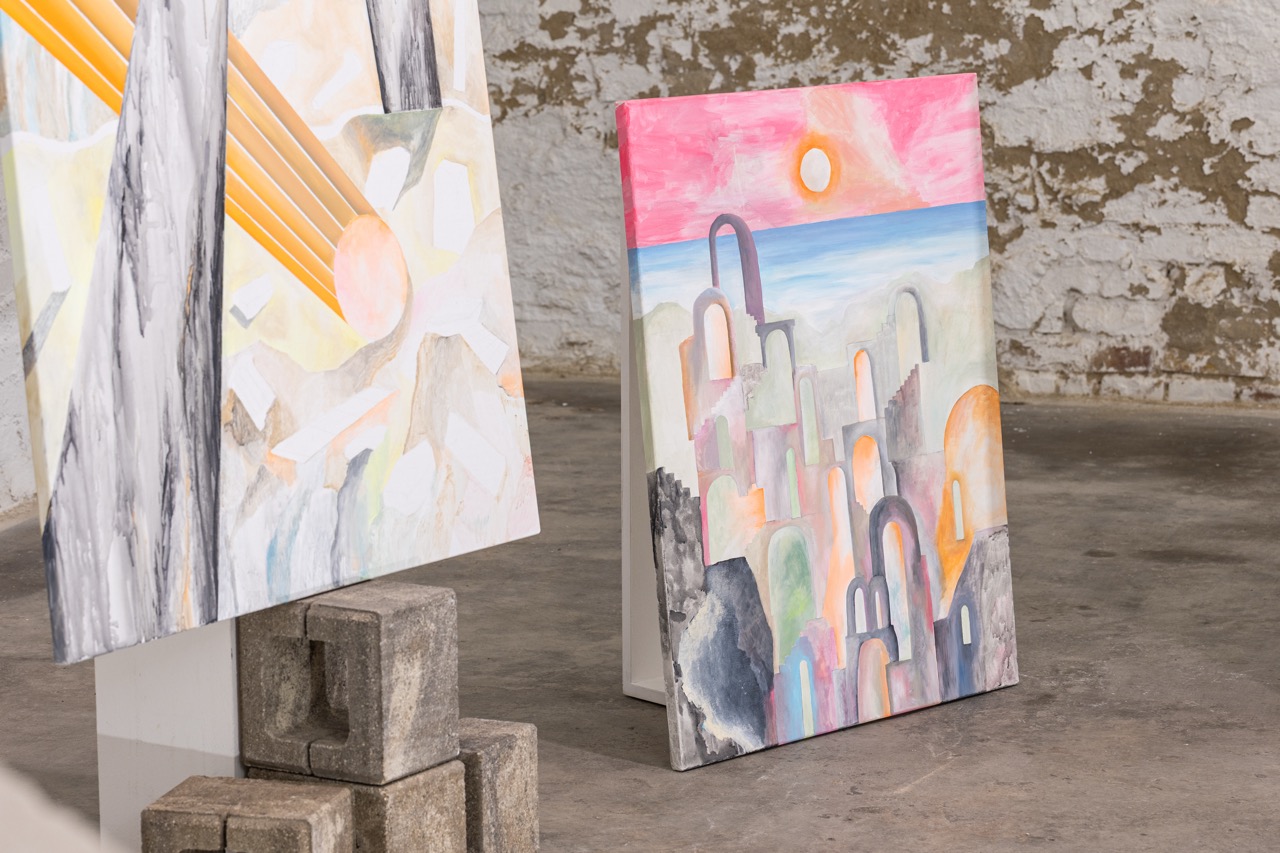
In the fictional “landscapes” of Anna Táncos, who holds a degree in architecture, ancient ruins emerge: remnants of the built environment appear in the form of staircases, columns, and arches. Imbued with a metaphysical interest, these paintings guide us into a utopia of antiquity that never was, and seem to reinforce the idea that our perspective on the past is deeply shaped by our present. From our current vantage point, we look back on bygone eras with nostalgia or escapism, substituting our incognizance with fiction. In Anna Táncos’s paintings and installations, she increasingly moves away from evoking specific buildings and spaces, and timelessness – or rather, the cycle of time, cyclicality – becomes important to her. As she puts it: “Ancient ruins, city-like structures, and archetypal architectural elements carry the layers of memory of Western civilization; in the images, the power of both decay and transcendence is present.”
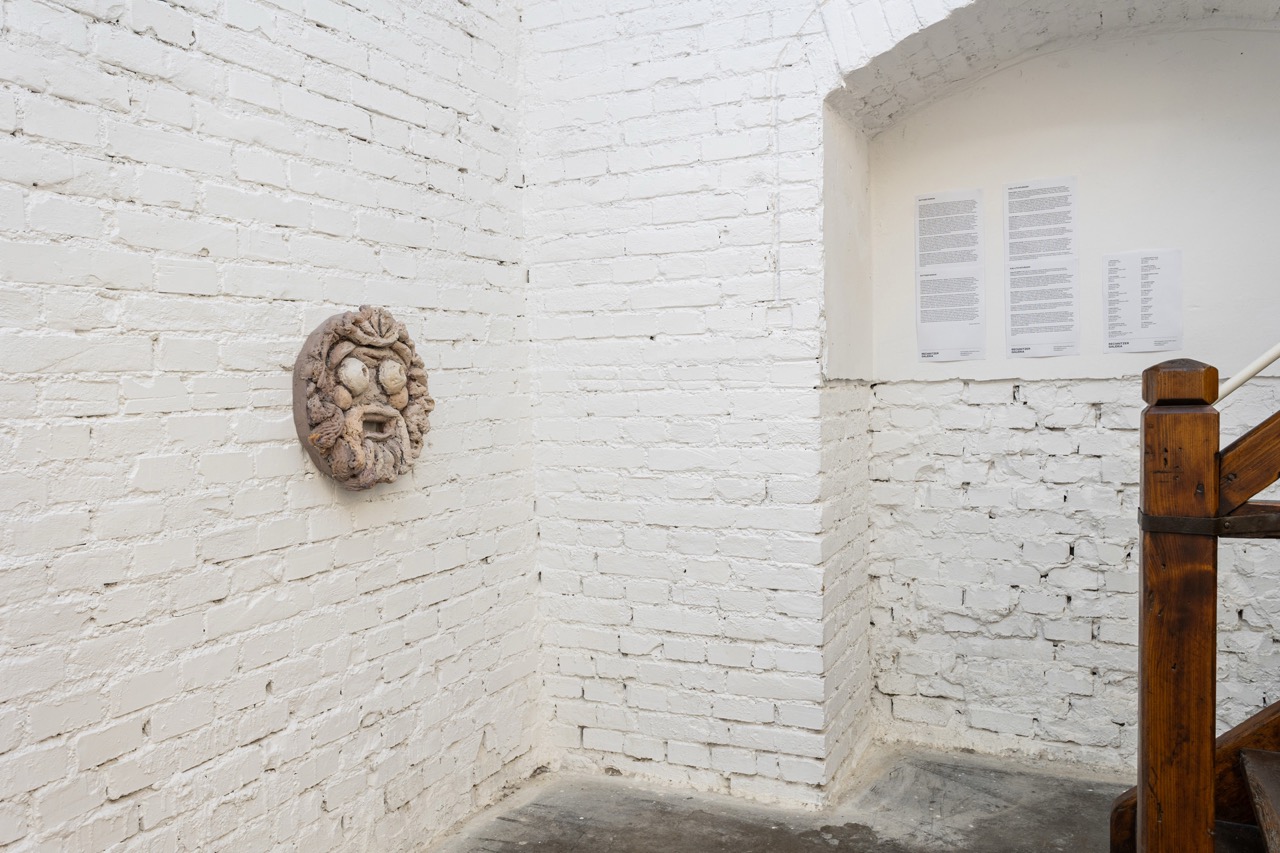
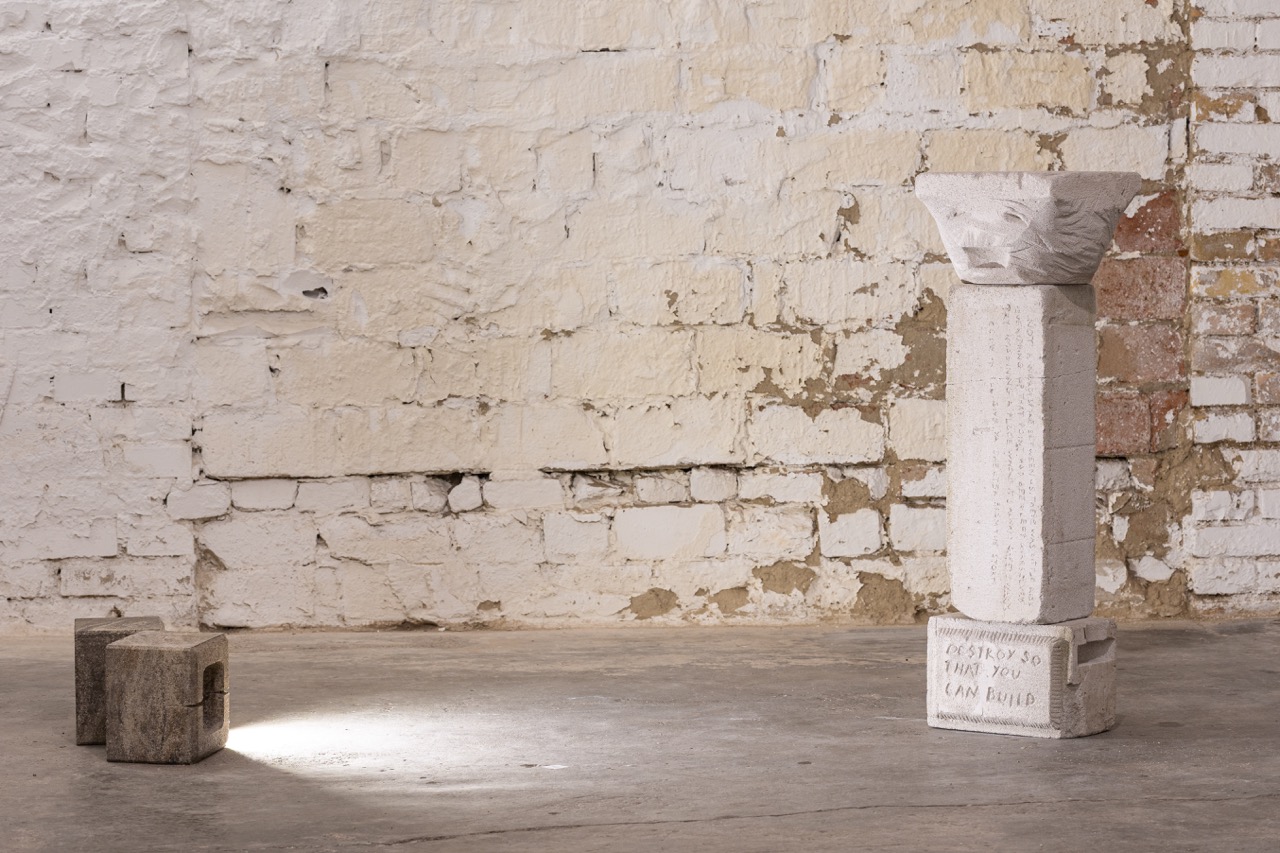
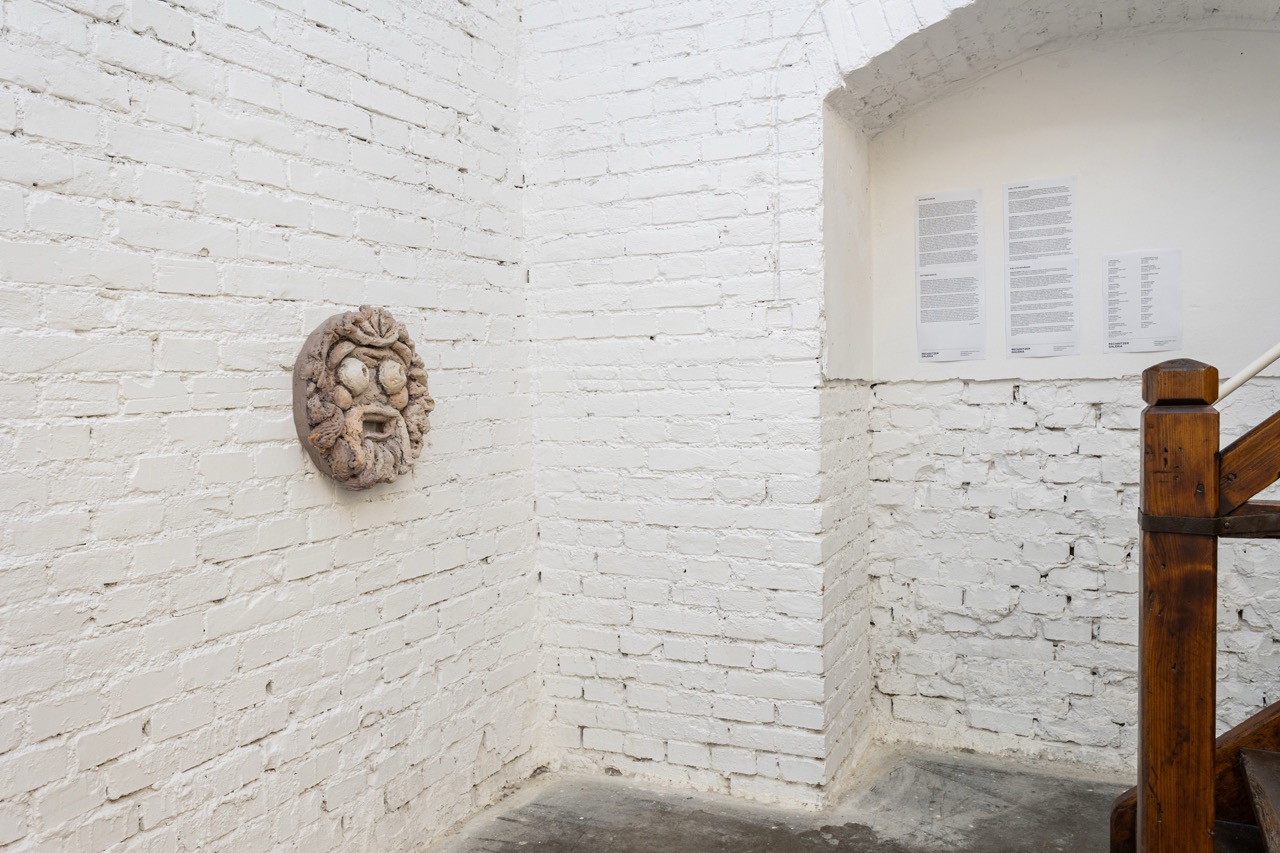
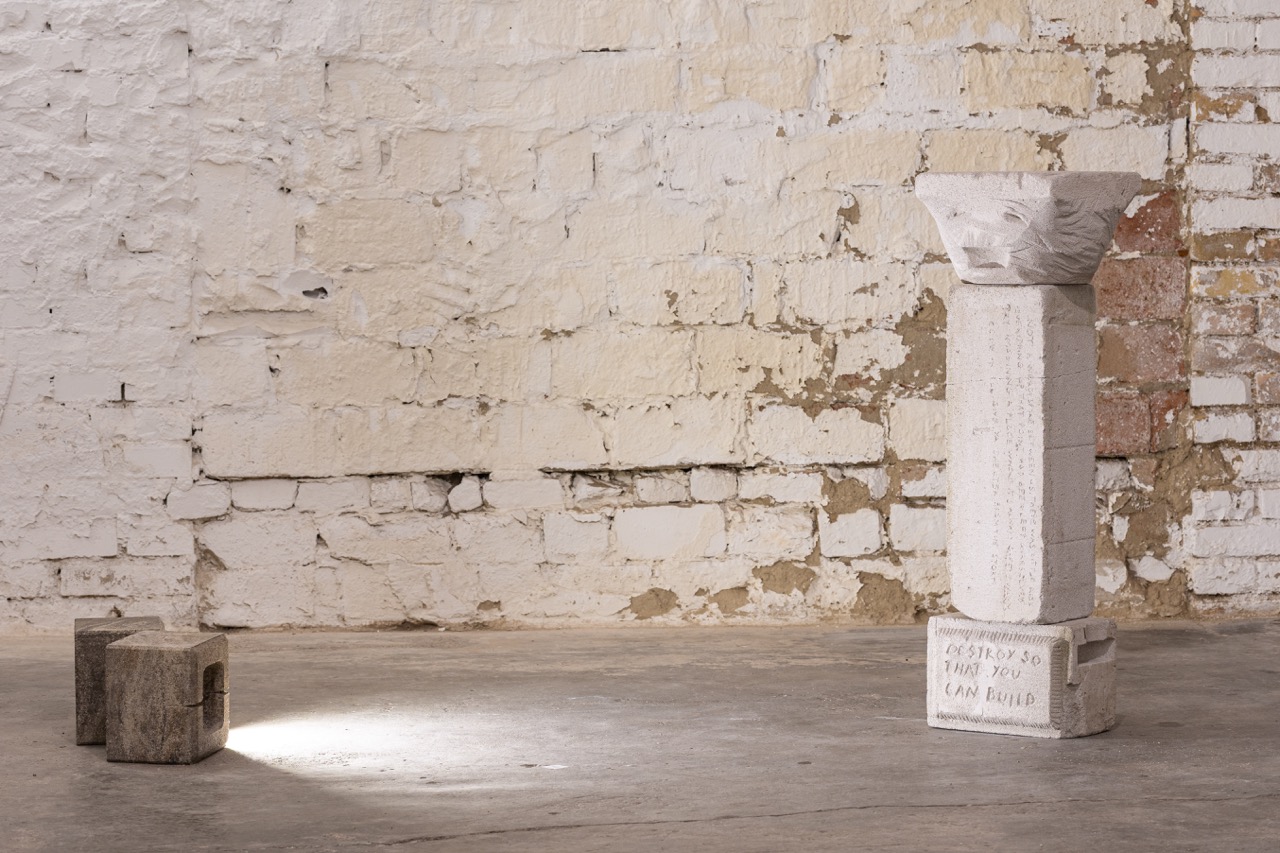
Zsófia Jauernik often works with recycled materials: the pedestal and column shaft shown here, made from Ytong blocks she found in a landfill and later carved, appear as if they have stepped out of the paintings by Táncos. The inscription on the pedestal juxtaposes a well-known quote by Lajos Kassák with an interpretation of art from a different era; one might think, for example, of the situation of ancient art treasures and the various restitution lawsuits, or as the artist – who, given his background, works in the field of historic preservation – summed it up: preservation is important to her by virtue of her profession, yet this stands in contrast to the “unaffectedness” of change and transience. A similar gesture is evident in another of Jauernik’s works, where the gaping mouth of Rome’s Bocca della Verità merges with the “confused” emoji: the sculpture seems to marvel at the diversity of its own interpretations.
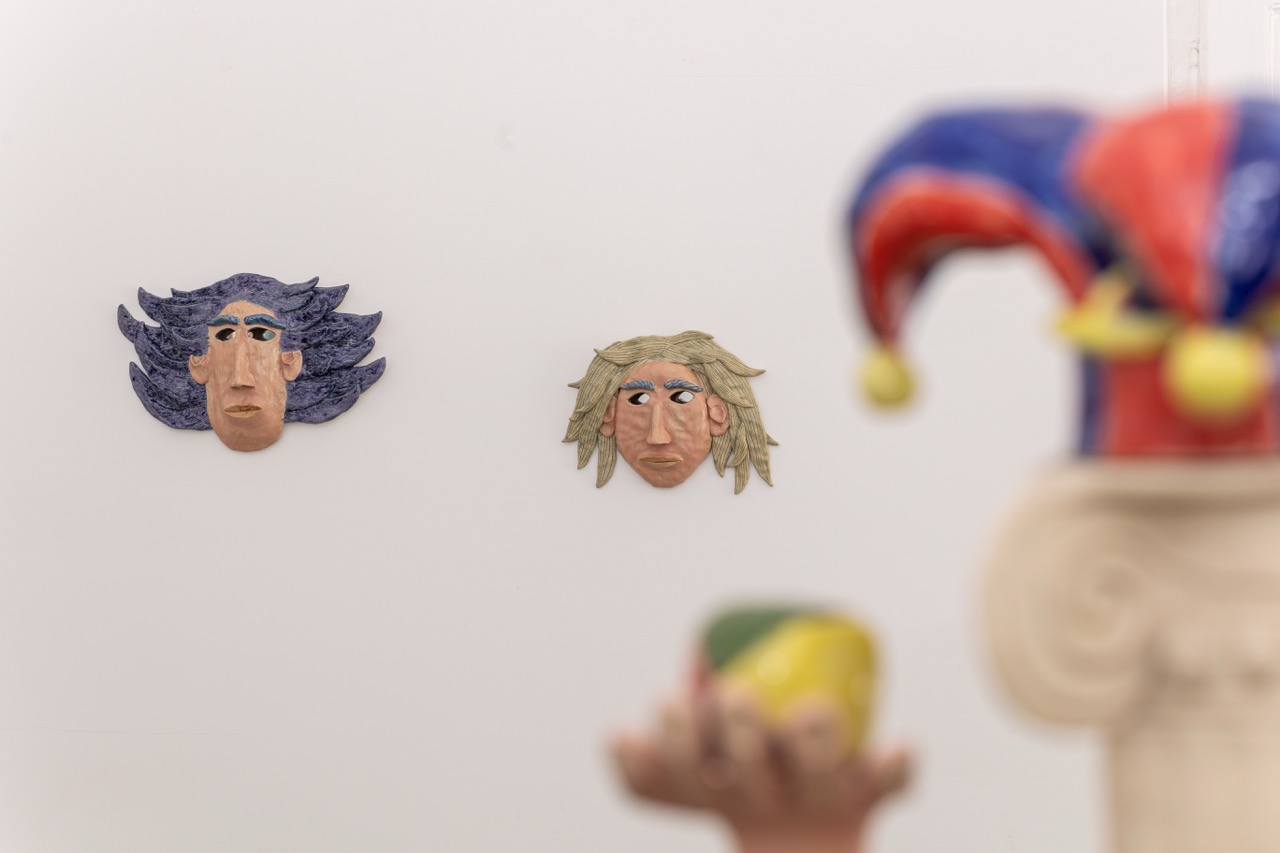
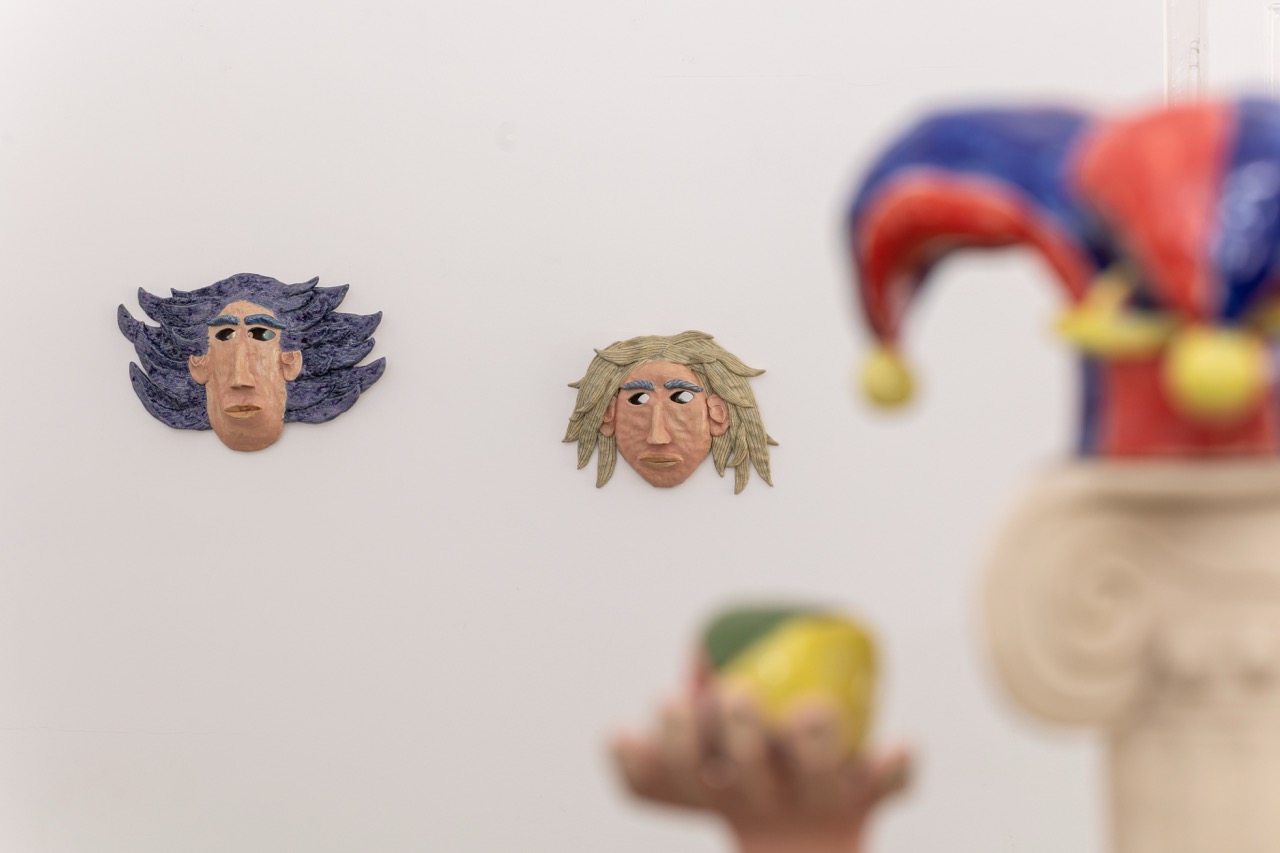
Humor and irony also play a key role in Rebeka Rácz’s ceramic works, as she deconstructs motifs familiar from the art of antiquity and later periods – such as the Middle Ages – by placing them in a contemporary context. The column or tower on display at the exhibition, composed of a variety of elements, embodies the ambiguity and sense of disorientation characteristic of the artist, which manifests itself in the form of strange contrasts, wild pairings, and shifts in scale. The objects created for the exhibition may simultaneously bring to mind masks familiar from the Greek theatrical tradition or the Gorgon, Medusa, whom Perseus ultimately defeated by confronting her with her own image and who has inspired numerous iconic works of literature and visual art, ranging from Caravaggio’s unsettling painting to Hélène Cixous’s feminist manifesto, The Laugh of the Medusa.
Mythological creatures are recurring figures in his paintings. In his paintings, nude male figures appear in the company of mythical, symbolic animals, telling stories of desire, masculinity, and the dynamics of dominance and subordination. His powerful compositions, dominated by red tones, celebrate physicality.
He graduated from the Hungarian University of Fine Arts in 2009 and was a student at the Akademie der Bildenden Künste in Nuremberg in 2007. In 2023, he earned his Ph.D. from the Hungarian University of Fine Arts; his research focused on the examination of hidden homoeroticism in 20th-century Hungarian painting. In 2019, Dallos won the junior category of the Herczeg Klára Award. In recent years, he has exhibited at venues including the Kunsthalle in Krems, the Ludwig Museum in Budapest, the Saatchi Gallery in London, and Alkinois in Athens. In 2017, he was a resident at the Cité des Arts Internationale in Paris, and in 2025, at the Salzburger Kunstverein. His works can be found in numerous private collections across Europe, from Switzerland to Poland.
He currently lives and works in Cologne.
From 2010 to 2013, he was a student at the Université Paris VIII., and from 2014 to 2015, he studied in the Intermedia program at the Hungarian University of Fine Arts. His works have been exhibited at numerous domestic and international institutions and exhibitions, including the TIC Gallery, the OFF-Biennale Budapest, Pragovka, the Carl Kostyál Gallery, and the Museum of Fine Arts. In 2023, he won the Esterházy Art Award, and in 2024, the AICA Award.
He lives and works in Budapest.
Anna TÁNCOS (1992) is an architect; she also paints, creates graffiti, works with ceramics, and always keeps one eye on exploring architectural forms and the peculiarities of human behavior. But it all comes together: what inspires her and how she creates.She is captivated not by the exposed leg of the classical Apollo torso, but by its plastic souvenir; not by the early Baroque façade of Il Gesu, but by the crumbling plaster of the pre-modern orange façades of the Garbatella suburban experiment; and she is inspired more by De Chirico’s metaphysical paintings than by postmodern star architects. These are reflected in the transcendent ruins of her landscapes, her crystalline, shimmering flower portraits beneath neon twilights, and her statues of Graces, who, with hunched backs, struggle to hold the weight of ceramic bowls.
She lives and works in Budapest.
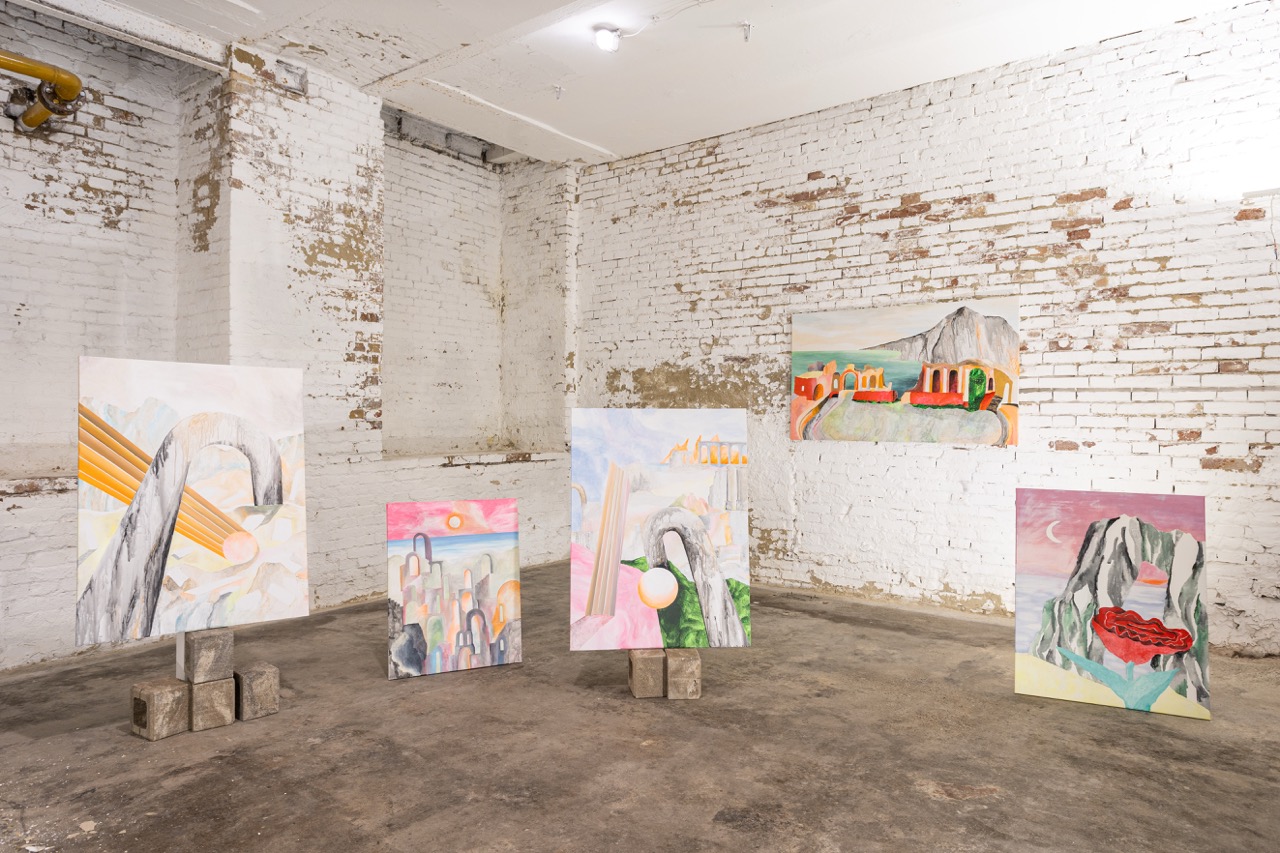
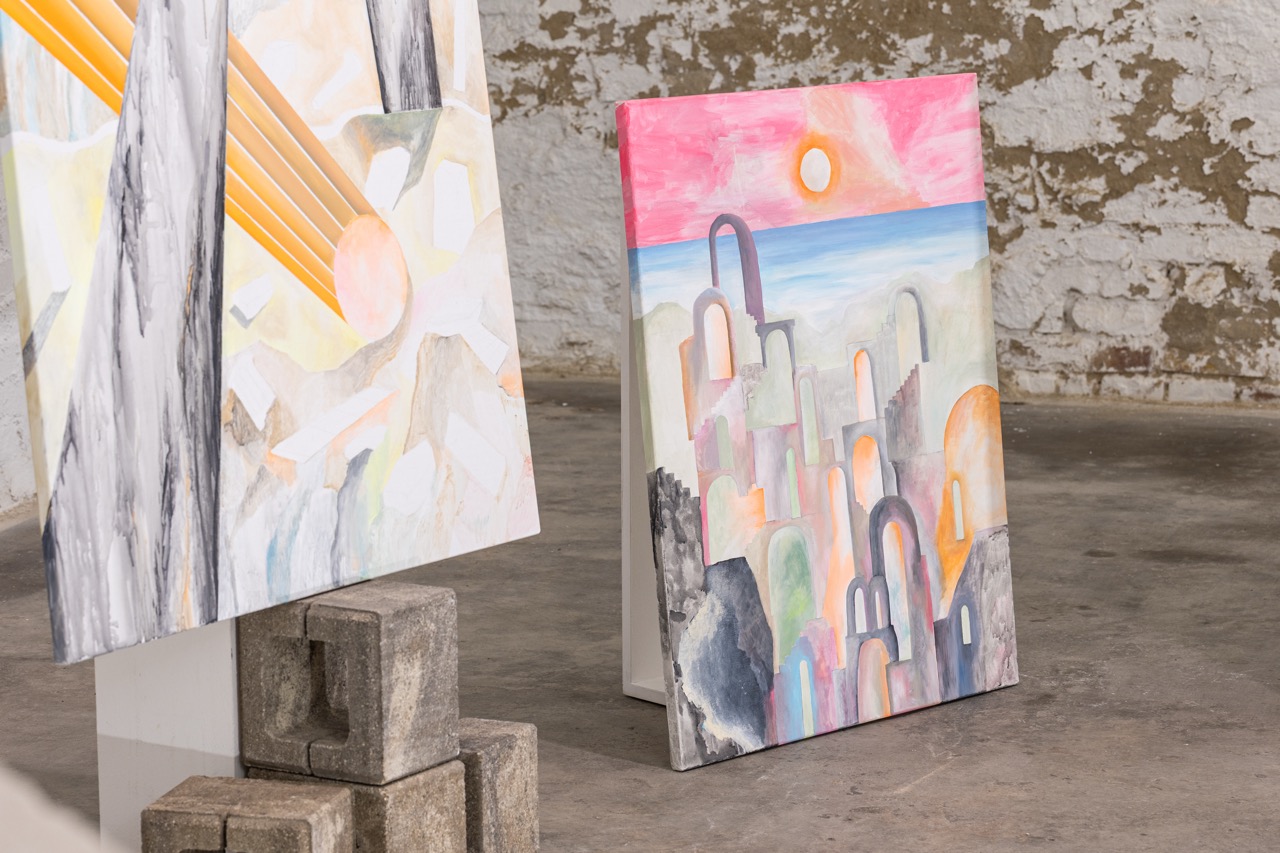
Featured works
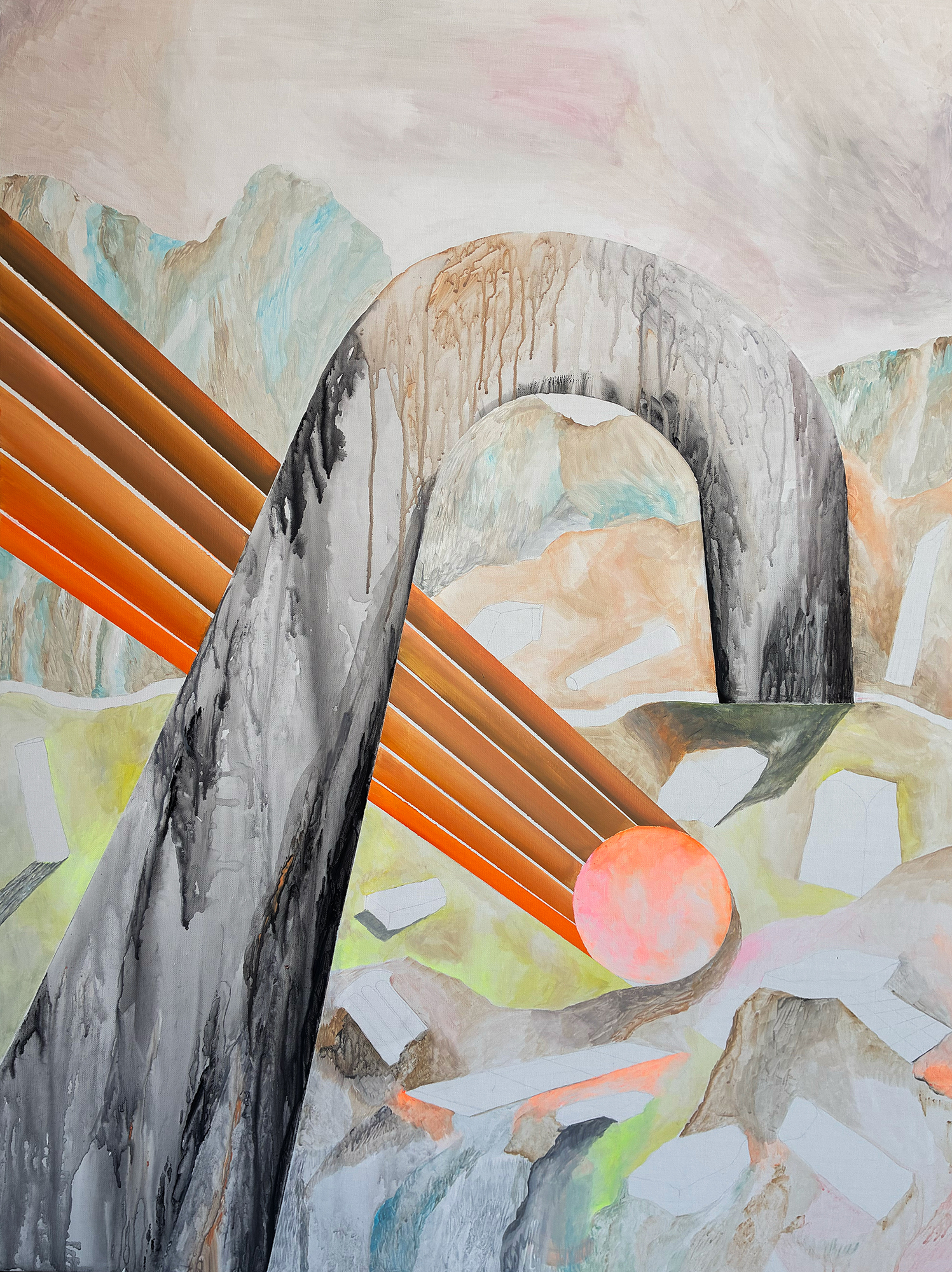
Anna TÁNCOS
Birth, 2026
acrylic on canvas, 90×120 cm
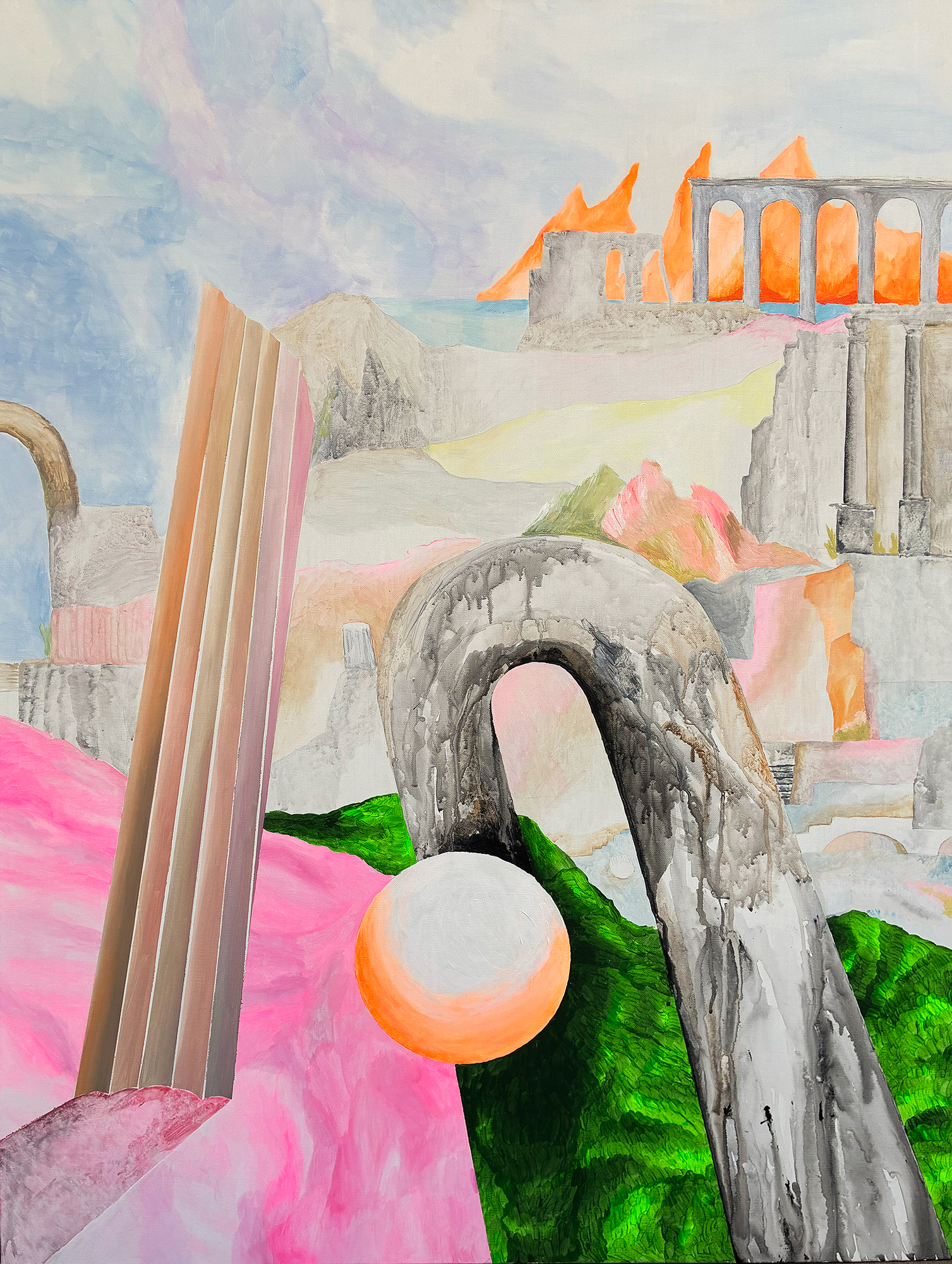
Anna TÁNCOS
Decay, 2026
acrylic on canvas, 90×120 cm
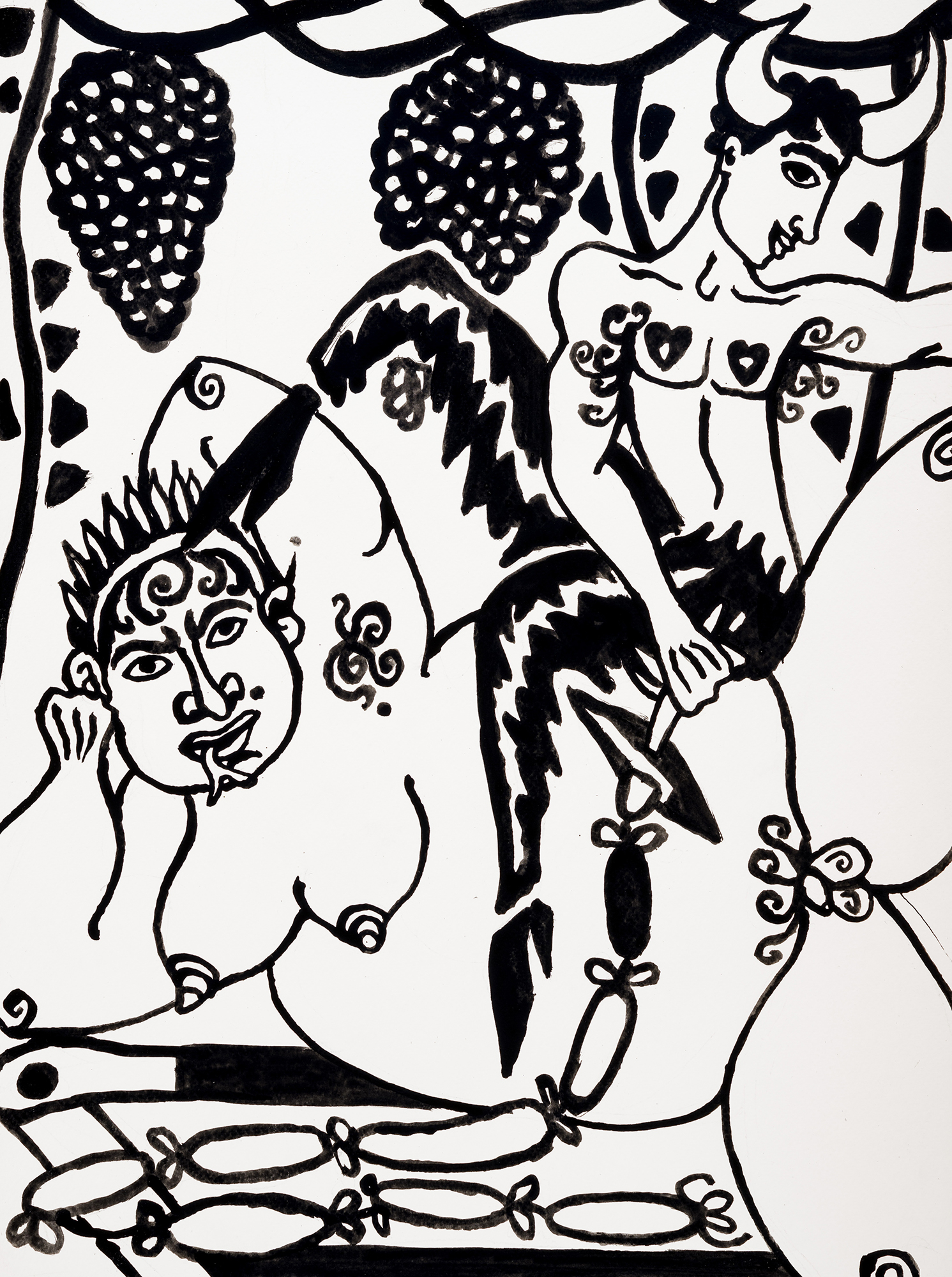
Ádám DALLOS
Ovidius 8., 2025
ink on paper, 36×48cm
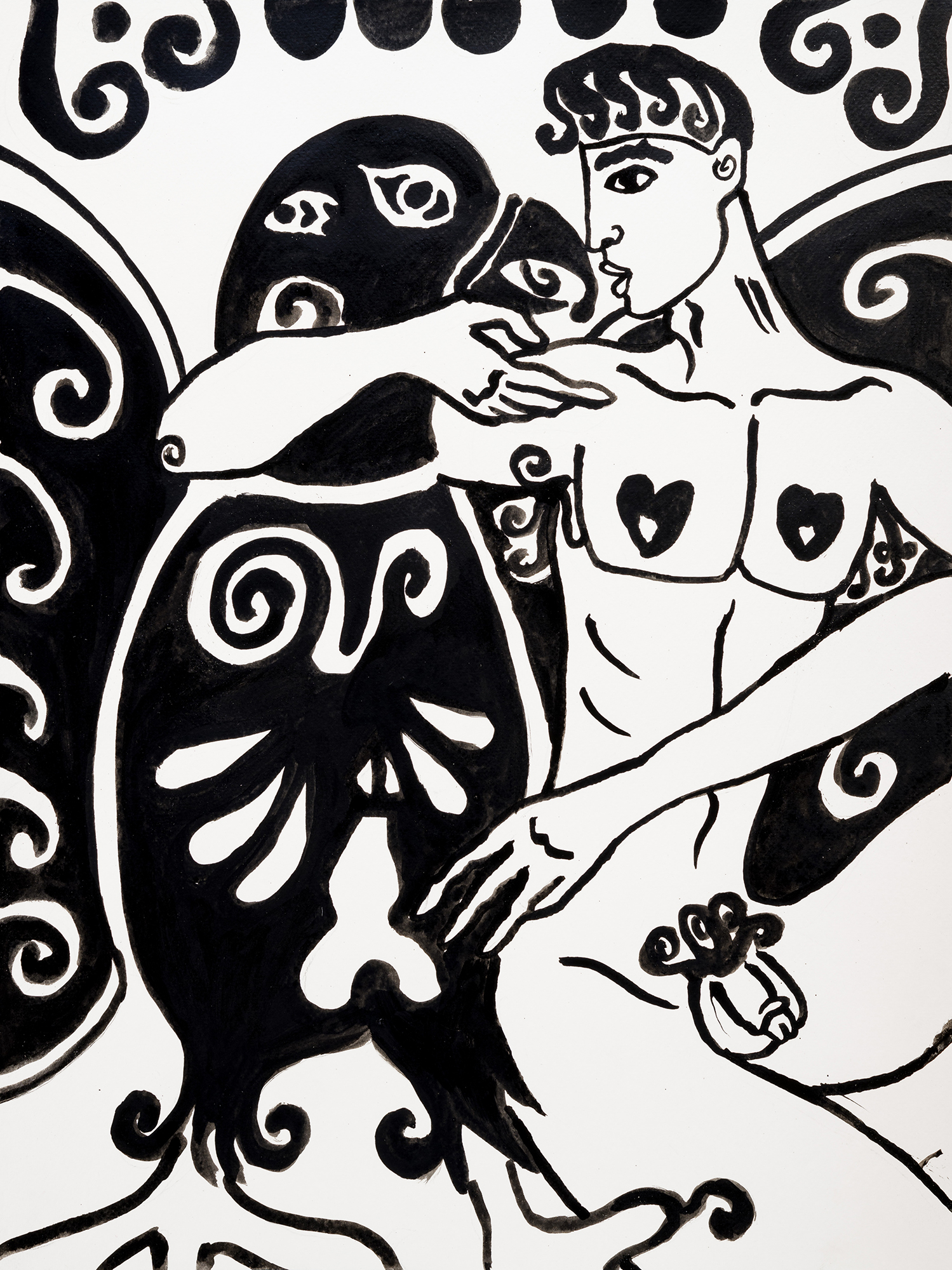
Ádám DALLOS
Ovidius 22., 2025
ink on paper, 36×48cm
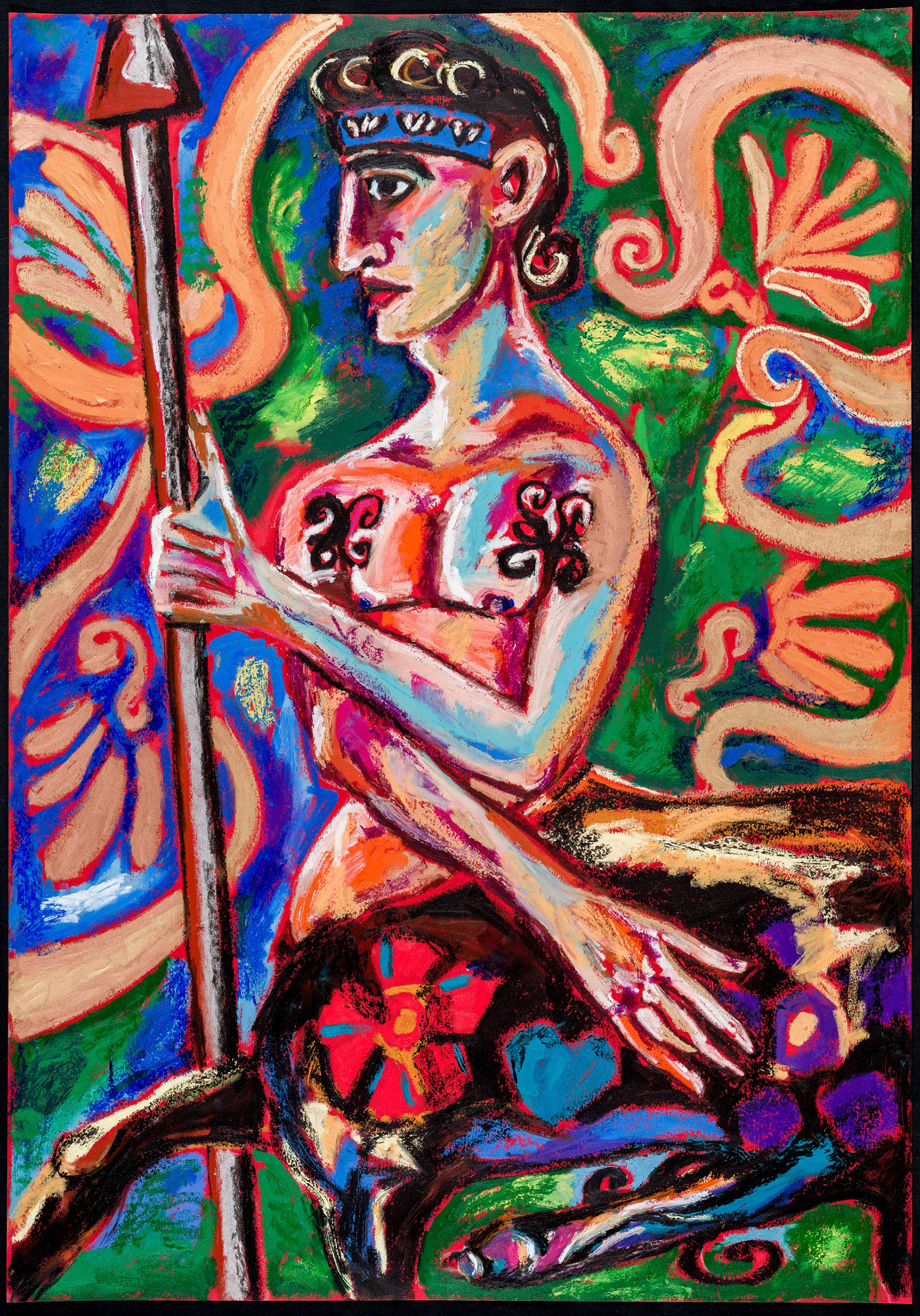
Ádám DALLOS
Young Centaur Prepares for Hunting, 2025
oil pastel, paper, 100×70cm
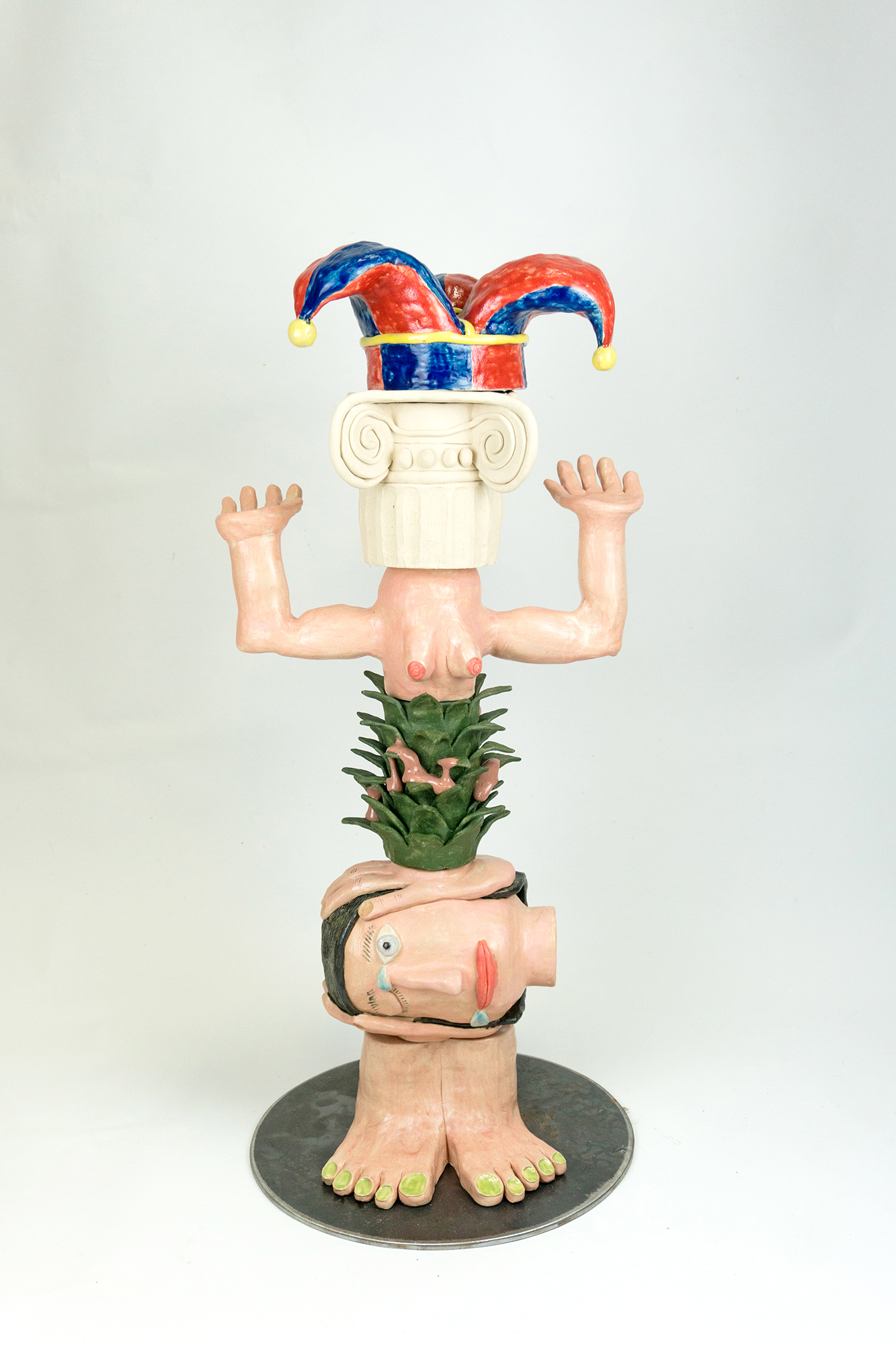
Rebeka RÁCZ
Farewell (to The Past), 2025,
mazed ceramics, metal, 80×40×20 cm
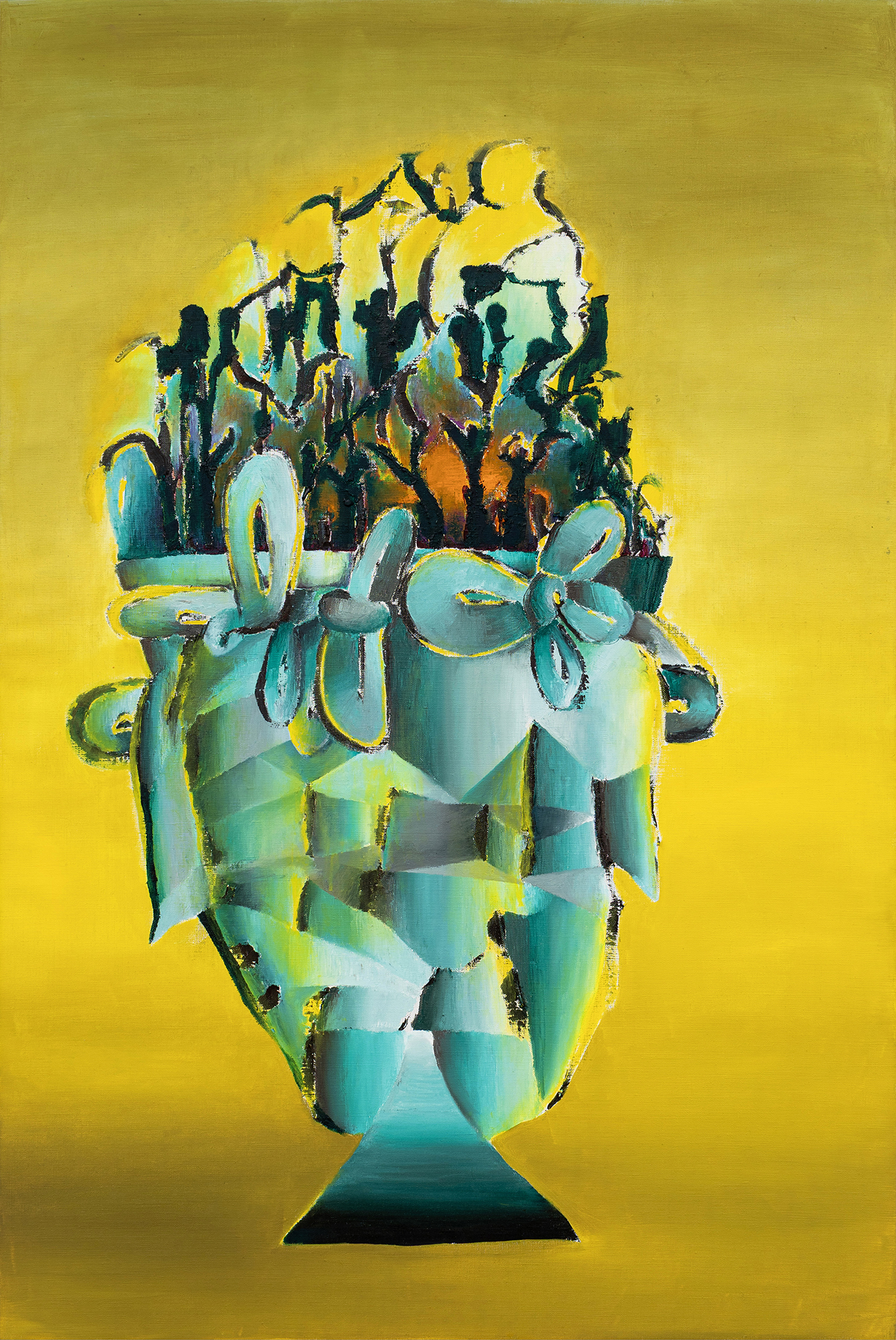
Vanda HUMINILOWICZ
Flower-patterned amphora, 2025
oil on canvas, 120×80 cm
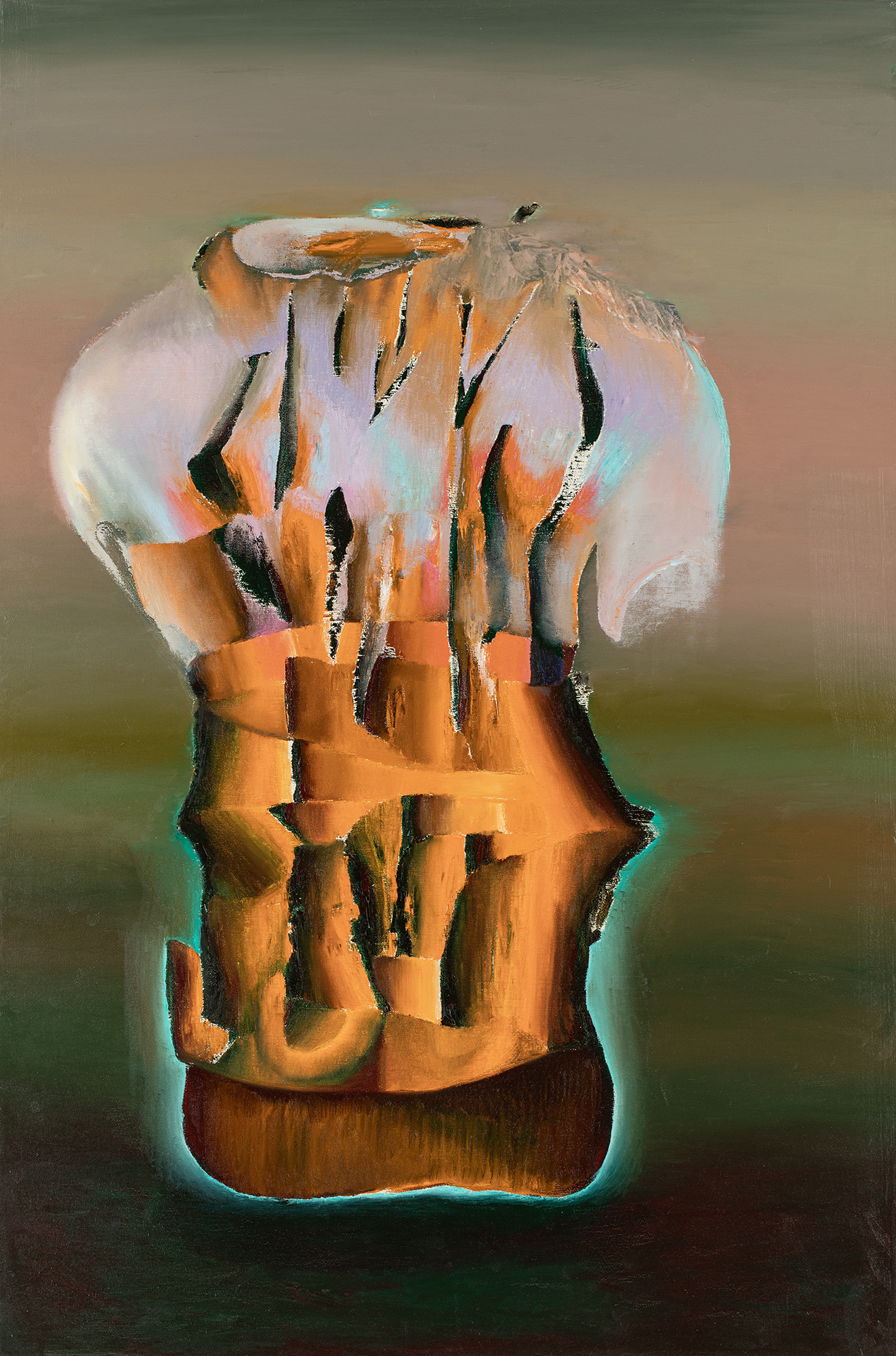
Vanda HUMINILOWICZ
Torso, 2026
oil on canvas, 120×80 cm
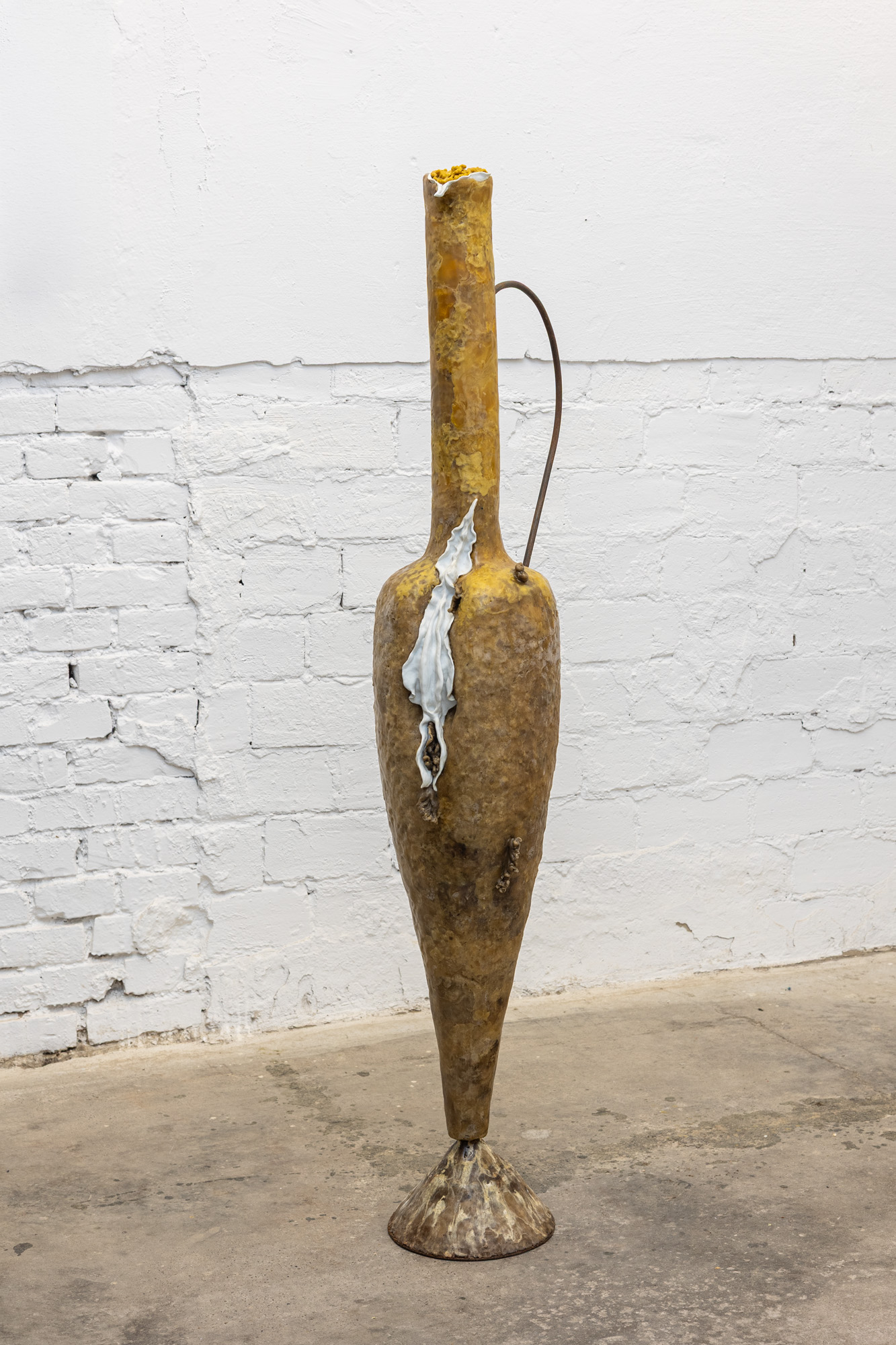
Gideon HORVÁTH
Vase of Virulence, 2023
steel, paper, beeswax, porcelain, 150×50×25 cm
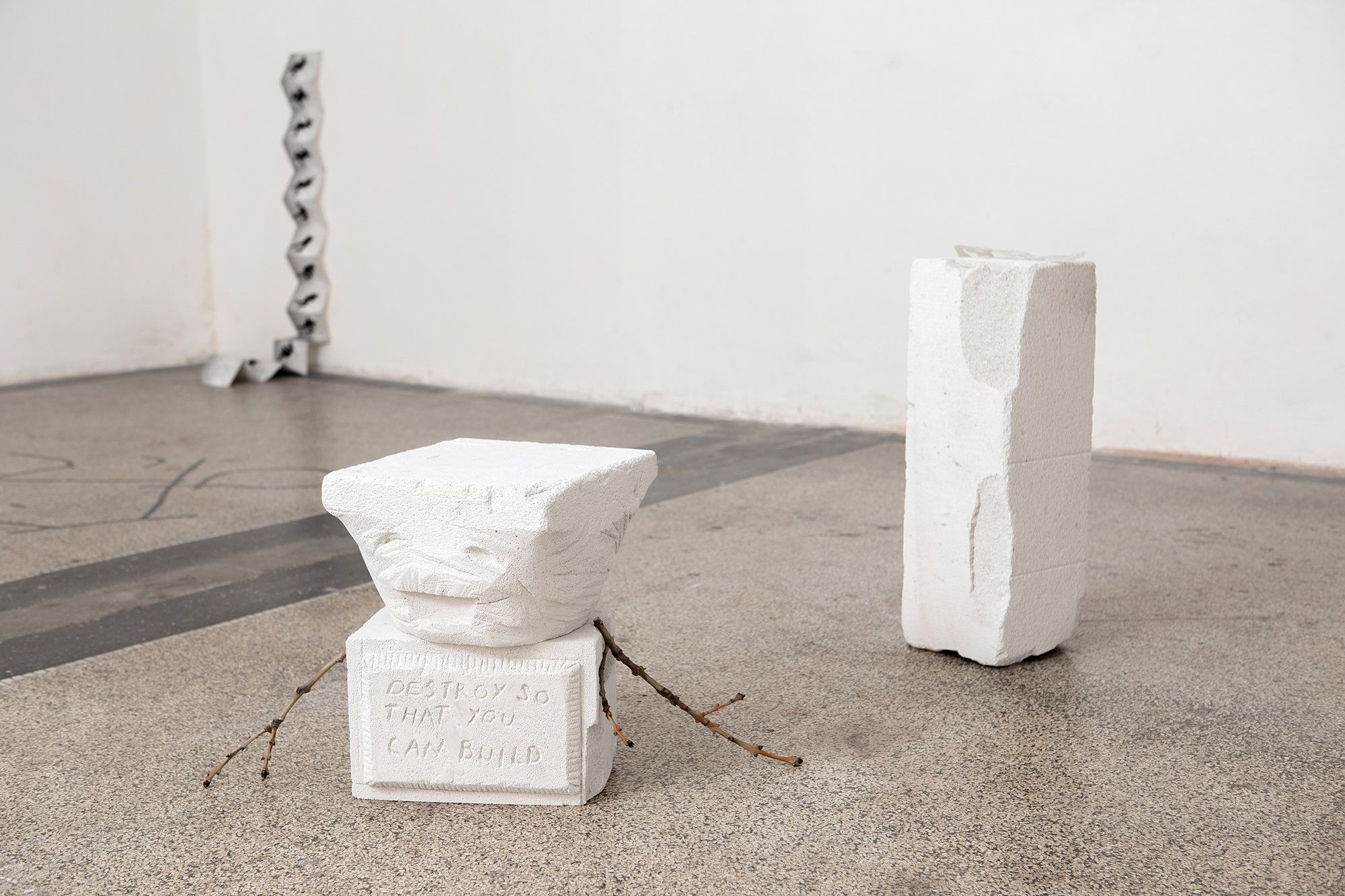
Zsófia JAUERNIK
My Little Pillar, 2021
carved Ytong, 100×30×30 cm